- ASIC
- Battery management ICs
- Clocks and timing solutions
- ESD and surge protection devices
- Automotive Ethernet
- Evaluation Boards
- High reliability
- Isolation
- Memories
- Microcontroller
- Power
- RF
- Security and smart card solutions
- Sensor technology
- Small signal transistors and diodes
- Transceivers
- Universal Serial Bus (USB)
- Wireless connectivity
- Suchwerkzeuge
- Technologie
- Packages
- Produktinformationen
- Bezugsquellen
- Überblick
- Automotive Ethernet PHY for in-vehicle networking
- Automotive Ethernet Switches for in-vehicle networking
- Überblick
- Embedded flash IP solutions
- Flash+RAM MCP solutions
- F-RAM (Ferroelectric RAM)
- NOR flash
- nvSRAM (non-volatile SRAM)
- PSRAM – Pseudostatic RAM
- Radiation hardened and high-reliability memories
- SRAMs (Static Random Access Memory)
- Wafer and die memory solutions
- Überblick
- AURIX™ TriCore™ MCUs
- PSOC™ MCUs
- TRAVEO™ T2G MCUs
- XMC™ MCUs
- Legacy MCUs
- MOTIX™ motor control SoCs/SIPs
- Überblick
- AC-DC power conversion
- Automotive conventional powertrain ICs
- Class D audio amplifier ICs
- Contactless power and sensing ICs
- DC-DC converters
- Diodes and thyristors (Si/SiC)
- eFuses
- Gallium nitride (GaN)
- Gate Driver ICs
- IGBTs – Insulated gate bipolar transistors
- Intelligent power modules (IPM)
- JFETs
- LED driver ICs
- Motor drivers
- MOSFETs
- Power modules
- Power supply ICs
- Protection and monitoring ICs
- Silicon carbide (SiC)
- Smart power switches
- Solid state relays and isolators
- Wireless charging ICs
- Überblick
- Antenna cross switches
- Antenna tuners
- Bias and control
- Coupler
- Driver amplifiers
- Rad hard microwave and RF
- Low noise amplifiers (LNAs)
- RF diode
- RF switches
- RF transistors
- Wireless control receiver
- Überblick
- Calypso® products
- CIPURSE™ products
- Contactless memories
- OPTIGA™ embedded security solutions
- SECORA™ security solutions
- Security controllers
- Smart card modules
- Smart solutions for government ID
- Überblick
- ToF 3D image sensors
- Current sensors
- Gas sensors
- Inductive position sensors
- MEMS microphones
- Pressure sensors
- Radar sensors
- Magnetic position sensors
- Magnetic speed sensors
- Capacitive sensors
- Temperature sensors
- Battery sensors
- Digital X-ray
- Computed tomography
- Sensor interface ASICs
- Überblick
- Bipolar transistors
- Diodes
- Small signal/small power MOSFET
- Überblick
- Automotive transceivers
- Control communication
- Powerline communications
- Überblick
- USB 2.0 peripheral controllers
- USB 3.2 peripheral controllers
- USB hub controllers
- USB PD high-voltage microcontrollers
- USB-C AC-DC and DC-DC charging solutions
- USB-C charging port controllers
- USB-C Power Delivery controllers
- Überblick
- AIROC™ Automotive wireless
- AIROC™ Bluetooth® and multiprotocol
- AIROC™ connected MCU
- AIROC™ Wi-Fi + Bluetooth® combos
- AIROC™ Ultra-Wide Band Solutions
- Überblick
- Commercial off-the-shelf (COTs) memory portfolio
- Defense memory portfolio
- High-reliability power conversion and management
- Überblick
- NewSpace memory portfolio
- Radiation tolerant power
- Überblick
- Rad hard microwave and RF
- Radiation hardened power
- Space memory portfolio
- Überblick
- Parallel NOR flash
- SEMPER™ NOR flash family
- SEMPER™ X1 LPDDR flash
- Serial NOR flash
- Überblick
-
32-bit TriCore™ AURIX™ – TC2x
- Überblick
- AURIX™ family – TC21xL
- AURIX™ family – TC21xSC (wireless charging)
- AURIX™ family – TC22xL
- AURIX™ family – TC23xL
- AURIX™ family – TC23xLA (ADAS)
- AURIX™ family – TC23xLX
- AURIX™ family – TC264DA (ADAS)
- AURIX™ family – TC26xD
- AURIX™ family – TC27xT
- AURIX™ family – TC297TA (ADAS)
- AURIX™ family – TC29xT
- AURIX™ family – TC29xTT (ADAS)
- AURIX™ family – TC29xTX
- AURIX™ TC2x emulation devices
-
32-bit TriCore™ AURIX™ – TC3x
- Überblick
- AURIX™ family - TC32xLP
- AURIX™ family – TC33xDA
- AURIX™ family - TC33xLP
- AURIX™ family – TC35xTA (ADAS)
- AURIX™ family – TC36xDP
- AURIX™ family – TC37xTP
- AURIX™ family – TC37xTX
- AURIX™ family – TC38xQP
- AURIX™ family – TC39xXA (ADAS)
- TC39xXX/XP
- AURIX™ family – TC3Ex
- AURIX™ TC37xTE (emulation devices)
- AURIX™ TC39xXE (emulation devices)
- 32-bit TriCore™ AURIX™ – TC4x
- Überblick
- PSOC™ 4 Arm® Cortex®-M0/M0+
- PSOC™ 4 HV Arm® Cortex®-M0+
- PSOC™ 5 LP Arm® Cortex®-M3
- PSOC™ 6 Arm® Cortex®-M4/M0+
- PSOC™ Multitouch Touchscreen Controller
- PSOC™ Control C3 Arm® Cortex®-M33
- PSOC™ Automotive 4: Arm® Cortex®-M0/M0+
- PSOC™ Edge Arm® Cortex® M55/M33
- PSOC™ Control C1 Arm® Cortex®-M0
- Überblick
- 32-bit TRAVEO™ T2G Arm® Cortex® for body
- 32-bit TRAVEO™ T2G Arm® Cortex® for cluster
- Überblick
- 32-bit XMC1000 industrial microcontroller Arm® Cortex®-M0
- 32-bit XMC4000 industrial microcontroller Arm® Cortex®-M4
- XMC5000 Industrial Microcontroller Arm® Cortex®-M4F
- 32-bit XMC7000 Industrial Microcontroller Arm® Cortex®-M7
- Überblick
- Legacy 32-bit MCU
- Legacy 8-bit/16-bit microcontroller
- Other legacy MCUs
- 32-bit FM Arm® Cortex® Microcontroller
- Sensing controllers
- Überblick
- AC-DC integrated power stage - CoolSET™
- AC-DC PWM and PFC controller
- Überblick
- Bridge rectifiers & AC switches
- CoolSiC™ Schottky diodes
- Diode bare dies
- Silicon diodes
- Thyristor / Diode Power Modules
- Thyristor soft starter modules
- Thyristor/diode discs
- Überblick
- GaN bidirectional switches
- GaN smart
- GaN transistors (GaN HEMTs)
- GaN with integrated driver
- GaN bare dies
- Überblick
- Automotive gate driver ICs
- Gate Driver ICs for GaN HEMTs
- Gate Driver ICs for SiC MOSFETs
- Half-Bridge Gate Driver ICs
- High-Side Gate Driver ICs
- Isolated Gate Driver ICs
- Level-Shift Gate Driver ICs
- Low-Side Gate Driver ICs
- Three-Phase Gate Driver ICs
- Transformer Driver ICs
- Überblick
- AC-DC LED driver ICs
- Ballast IC
- DC-DC LED driver IC
- LED dimming interface IC
- Linear LED driver IC
- LITIX™ - Automotive LED Driver IC
- NFC wireless configuration IC with PWM output
- VCSEL driver
- Überblick
- BLDC motor drivers
- BDC motor drivers
- Stepper & servo motor drivers
- Motor drivers with MCU
- Bridge drivers with MOSFETs
- Gate Driver ICs
- Überblick
- Automotive MOSFET: 30 V to 800 V
- Dual MOSFETs
- MOSFET (Si & SiC) Modules
- N-channel depletion mode MOSFET
- N-channel MOSFETs
- P-channel MOSFETs
-
Silicon carbide CoolSiC™ MOSFETs
- Überblick
- Silicon Carbide MOSFET modules
- Silicon carbide MOSFET discretes
- Silicon carbide MOSFETs bare dies
- 400 V / 440 V Silicon Carbide MOSFETs
- 650 V Silicon Carbide MOSFETs
- 750 V Silicon Carbide MOSFETs
- 1200 V Silicon Carbide MOSFETs
- 2000 V Silicon Carbide MOSFETs
- 2300 V Silicon Carbide MOSFETs
- 3300 V Silicon Carbide MOSFETs
- 1700 V Silicon Carbide MOSFETs
- Small signal/small power MOSFET
- Überblick
- IGBT modules
- MOSFET (Si & SiC) Modules
- Intelligent power modules (IPM)
- Diodes and thyristors (Si/SiC)
- Automotive IGBT and CoolSiC™ MOSFET modules
- High density power modules
- Überblick
- Automotive transceivers
- Linear voltage regulators
- Power management ICs (PMIC)
- Automotive switching regulators
- System Basis Chips (SBC)
- Überblick
- High-side switches
- Low-side switches
- Multichannel SPI Switches & Controller
- Automotive eFuses
- Überblick
- Radar sensors for automotive
- Radar sensors for IoT
- Überblick
- EZ-USB™ CX3 MIPI CSI2 to USB 3.0 camera controller
- EZ-USB™ FX10 & FX5N USB 10Gbps peripheral controller
- EZ-USB™ FX20 USB 20 Gbps peripheral controller
- EZ-USB™ FX3 USB 5 Gbps peripheral controller
- EZ-USB™ FX3S USB 5 Gbps peripheral controller with storage interface
- EZ-USB™ FX5 USB 5 Gbps peripheral controller
- EZ-USB™ SD3 USB 5 Gbps storage controller
- EZ-USB™ SX3 FIFO to USB 5 Gbps peripheral controller
- Überblick
- EZ-PD™ PMG1-B1 Battery Charge Controller with USB-C PD MCU
- EZ-PD™ PMG1-S0 high-voltage MCU with USB-C and PD
- EZ-PD™ PMG1-S1 high-voltage MCU with USB-C and PD
- EZ-PD™ PMG1-S2 high-voltage MCU with USB PD
- EZ-PD™ PMG1-S3 high-voltage MCU with USB-C & PD
- EZ-PD™ PMG1-B2 Battery Charge Controller with USB-C PD MCU
- Überblick
- EZ-PD™ CCG3 USB type-C port controller PD
- EZ-PD™ CCG3PA USB-C and PD
- EZ-PD™ CCG3PA-NFET USB-C PD controller
- EZ-PD™ CCG7x consumer USB-C Power Delivery & DC-DC controller
- EZ-PD™ PAG1: power adapter generation 1
- EZ-PD™ PAG2: Power Adapter Generation 2
- EZ-PD™ PAG2-PD USB-C PD Controller
- Überblick
- EZ-PD™ ACG1F one-port USB-C controller
- EZ-PD™ CCG2 USB Type-C port controller
- EZ-PD™ CCG3PA Automotive USB-C and Power Delivery controller
- EZ-PD™ CCG4 two-port USB-C and PD
- EZ-PD™ CCG5 dual-port and CCG5C single-port USB-C PD controllers
- EZ-PD™ CCG6 one-port USB-C & PD controller
- EZ-PD™ CCG6_CFP and EZ-PD™ CCG8_CFP Dual-Single-Port USB-C PD
- EZ-PD™ CCG6DF dual-port and CCG6SF single-port USB-C PD controllers
- EZ-PD™ CCG7D Automotive dual-port USB-C PD + DC-DC controller
- EZ-PD™ CCG7S Automotive single-port USB-C PD solution with a DC-DC controller + FETs
- EZ-PD™ CCG8 dual-single-port USB-C PD
- EZ-PD™ CMG1 USB-C EMCA controller
- EZ-PD™ CMG2 USB-C EMCA controller with EPR
Nach Architektur durchsuchen
Nach Technologien durchsuchen
- AKTUELLES IN
- Aerospace and defense
- Automotive
- Communications
- Consumer electronics
- Health and lifestyle
- Industrial
- AI and data center
- Security solutions
- Smart home and building
- Solutions
- Überblick
- Defense applications
- Space applications
- Überblick
- ADAS & autonomous driving
- Automotive body electronics
- Chassis control & safety
- Electric vehicle drivetrain system
- EV thermal management system
- In-vehicle infotainment & HMI
- Automotive LED lighting systems
- Light electric vehicle solutions
- Automotive zonal architecture
- Überblick
- Satellite communications
- Telecommunications infrastructure
- Überblick
- Power adapters and chargers
- Complete system solutions for smart TVs
- Mobile device and smartphone solutions
- Semiconductor solutions for home entertainment applications
- Smart conference systems
- Drones
- AR and smart glasses
- Photovoltaic
- Consumer Wearables
- Home appliances
- Überblick
- Asset Tracking
- Battery formation and testing
- Power adapters and chargers
- Industrial robots
- Light electric vehicle solutions
- Uninterruptible power supplies (UPS)
- Digital health
- Electric forklifts
- Battery energy storage (BESS)
- EV charging
- High voltage solid-state power distribution
- Hydrogen electrolysis
- Industrial automation
- Industrial motor drives and controls
- Industrial & Medical SMPS
- LED lighting system design
- Photovoltaic
- Power tools
- Power transmission and distribution
- Robotics
- Traction
- Wind power
- Überblick
- Machine Learning Edge AI
- Data center power solutions
- Edge computing
- Überblick
- Device authentication and brand protection
- eSIM applications
- Government identification
- Mobile security
- Payment solutions
- Embedded security for the Internet of Things (IoT)
- Access control and ticketing
- Überblick
- Domestic robots
- Semiconductor solutions for home entertainment applications
- Home and building automation
- Heating ventilation and air conditioning (HVAC)
- PC accessories
- Überblick
- Battery management systems (BMS)
- Connectivity
- Human Machine Interface
- Machine Learning Edge AI
- Motor control
- Power conversion
- Security
- Sensor solutions
- System diagnostics and analytics
- Überblick
- Active suspension control
- Automotive braking solutions
- Automotive steering solutions
- Chassis domain control
- Überblick
-
Automotive battery management system
- Überblick
- Automotive battery cell monitoring & balancing
- Automotive battery control unit (BCU)
- Automotive battery isolated communication
- Automotive battery passport & event logging
- Automotive battery pack monitoring
- BMS (electric two- & three-wheelers)
- Automotive battery protection & disconnection
- Automotive current sensing & coulomb counting
- Automotive battery management system (BMS) - high-voltage
- Automotive battery management system (BMS) - 12 V to 24 V
- Automotive battery management system (BMS) - 48 V
- Auxiliary inverter - high-voltage (commercial vehicles)
- Auxiliary inverter
- EV charging
- FCEV powertrain solutions
- DC-DC converter high-voltage
- DC-DC converter high-voltage (commercial vehicles)
- On-board charging (OBC)
- On-board charging (OBC) solutions for electric two- and three-wheelers
- On-board charging (electric commercial vehicles)
- EV traction inverter
- Traction inverter (electric commercial vehicles)
- Traction inverter (electric two- & three-wheelers)
- Überblick
- Automotive animated LED lighting system
- Full LED headlight system - multi-channel LED driver
- Automotive LED rear single light functions
- LED driver solutions for electric two- and three-wheelers
- LED pixel light controller - supply & communication
- Automotive LED front single light functions
- Static interior ambient LED light
- Überblick
- Audio amplifier solutions
- Complete system solutions for smart TVs
- Distribution audio amplifier unit solutions
- Home theater installation speaker system solutions
- Party speaker solutions
- PoE audio amplifier unit solutions
- Portable speaker solutions
- Powered active speaker systems
- Remote control
- Smart speaker designs
- Soundbar solutions
- Überblick
- Disposable healthcare equipment
- Durable healthcare equipment
- Healthcare wearables
- Überblick
- Data center power solutions
- Industrial robots
- Industrial motor drives and controls
- Mobile robots (AGV, AMR)
- Home and building automation
- Solid-state circuit breaker (SSCB)
- Uninterruptible power supplies (UPS)
- Digital input/output (I/O) modules
- DIN rail power supply solutions
- Industrial HMI Monitors and Panels
- Industrial PC
- Machine vision
- Programmable logic controller (PLC)
- Überblick
- FPGAs in datacenter applications
- Power system reliability modeling
- Data center power distribution
-
Server rack power management
- Überblick
- Intermediate Bus Converter (IBC)
- AI accelerator cards
- AMD CPU voltage regulator Ics
- Ampere CPU voltage regulator Ics
- Intel CPU voltage regulator Ics
- Network switches for AI data centers and server racks
- Server power path protection
- Server battery backup units (BBU)
- Server power supply units (PSU)
- SmartNIC cards
- Überblick
- AC-DC power conversion
- DC-DC power conversion
- Überblick
- Power supply health monitoring
- AKTUELLES IN
- Digital documentation
- Boards & Kits
- Finder & selection tools
- Platforms
- Services
- Simulation & Modeling
- Software
- Tools
- Partners
- Maker
- University Alliance Program
- Überblick
- Bipolar Discs Finder
- Bipolar Module Finder
- Connected Secure Systems Finder
- Diode Rectifier Finder
- ESD Protection Finder
- Evaluation Board Finder
- Gate Driver Finder
- IGBT Discrete Finder
- IGBT Module Finder
- IPM Finder
- Microcontroller Finder
- MOSFET Finder
- PMIC Finder
- Product Finder
- PSOC™ and FMx MCU Board & Kit Finder
- Radar Finder
- Reference Design Finder
- Simulation Model Finder
- Smart Power Switch Finder
- Transceiver Finder
- Voltage Regulator Finder
- Wireless Connectivity Board & Kit Finder
- Überblick
- AIROC™ software & tools
- AURIX™ software & tools
- DRIVECORE™ for automotive software development
- iMOTION™ software & tools
- Infineon Smart Power Switches & Gate Driver Tool Suite
- MOTIX™ software & tools
- OPTIGA™ software & tools
- PSOC™ software & tools
- TRAVEO™ software & tools
- XENSIV™ software & tools
- XMC™ software & tools
- Überblick
- CoolGaN™ Simulation Tool (PLECS)
- HiRel Fit Rate Tool
- Infineon Designer
- Interactive product sheet
- IPOSIM Online Power Simulation Platform
- InfineonSpice Offline Simulation Tool
- OPTIREG™ automotive power supply ICs Simulation Tool (PLECS)
- Power MOSFET Simulation Models
- PowerEsim Switch Mode Power Supply Design Tool
- Solution Finder
- XENSIV™ Magnetic Sensor Simulation Tool
- Überblick
- AURIX™ certifications
- AURIX™ development tools
-
AURIX™ Embedded Software
- Überblick
- AURIX™ Applications software
- AURIX™ Artificial Intelligence
- AURIX™ Gateway
- AURIX™ iLLD Drivers
- Infineon safety
- AURIX™ Security
- AURIX™ TC3xx Motor Control Application Kit
- AURIX™ TC4x SW application architecture
- Infineon AUTOSAR
- Communication and Connectivity
- Middleware
- Non AUTOSAR OS/RTOS
- OTA
- AURIX™ Microcontroller Kits
- Überblick
- TRAVEO™ Development Tools
- TRAVEO™ Embedded Software
- Überblick
- XENSIV™ Development Tools
- XENSIV™ Embedded Software
- XENSIV™ evaluation boards
- Überblick
- CAPSENSE™ Controllers Code Examples
- Memories for Embedded Systems Code Examples
- PSOC™ 1 Code Examples for PSOC™ Designer
- PSOC™ 3 Code Examples for PSOC™ Creator
- PSOC™ 3/4/5 Code Examples
- PSOC™ 4 Code Examples for PSOC™ Creator
- PSOC™ 6 Code Examples for PSOC™ Creator
- PSOC™ 63 Code Examples
- USB Controllers Code Examples
- Überblick
- DEEPCRAFT™ AI Hub
- DEEPCRAFT™ Audio Enhancement
- DEEPCRAFT™ Model Converter
-
DEEPCRAFT™ Ready Models
- Überblick
- DEEPCRAFT™ Ready Model for Baby Cry Detection
- DEEPCRAFT™ Ready Model for Cough Detection
- DEEPCRAFT™ Ready Model for Direction of Arrival (Sound)
- DEEPCRAFT™ Ready Model for Factory Alarm Detection
- DEEPCRAFT™ Ready Model for Fall Detection
- DEEPCRAFT™ Ready Model for Gesture Classification
- DEEPCRAFT™ Ready Model for Siren Detection
- DEEPCRAFT™ Ready Model for Snore Detection
- DEEPCRAFT™ Studio
- DEEPCRAFT™ Voice Assistant
- Überblick
- AIROC™ Wi-Fi & Bluetooth EZ-Serial Module Firmware Platform
- AIROC™ Wi-Fi & Bluetooth Linux and Android Drivers
- emWin Graphics Library and GUI for PSOC™
- Infineon Complex Device Driver for Battery Management Systems
- Memory Solutions Hub
- PSOC™ 6 Peripheral Driver Library (PDL) for PSOC™ Creator
- USB Controllers EZ-USB™ GX3 Software and Drivers
- Überblick
- CAPSENSE™ Controllers Configuration Tools EZ-Click
- DC-DC Integrated POL Voltage Regulators Configuration Tool – PowIRCenter
- EZ-USB™ SX3 Configuration Utility
- FM+ Configuration Tools
- FMx Configuration Tools
- Tranceiver IC Configuration Tool
- USB EZ-PD™ Configuration Utility
- USB EZ-PD™ Dock Configuration Utility
- USB EZ-USB™ HX3C Blaster Plus Configuration Utility
- USB UART Config Utility
- XENSIV™ Tire Pressure Sensor Programming
- Überblick
- EZ-PD™ CCGx Dock Software Development Kit
-
FMx Softune IDE
- Überblick
- RealOS™ Real-Time Operating System
- Softune IDE Language tools
- Softune Workbench
- Tool Lineup for F2MC-16 Family SOFTUNE V3
- Tool Lineup for F2MC-8FX Family SOFTUNE V3
- Tool Lineup for FR Family SOFTUNE V6
- Virtual Starter Kit
- Windows 10 operation of released SOFTUNE product
- Windows 7 operation of released SOFTUNE product
- Windows 8 operation of released SOFTUNE product
- Infineon GUI Designer
- ModusToolbox™ Software
- PSOC™ Creator Software
- Radar Development Kit
- RUST
- USB Controllers SDK
- Wireless Connectivity Bluetooth Mesh Helper Applications
- XMC™ DAVE™ Software
- Überblick
- AIROC™ Bluetooth® Connect App Archive
- Cypress™ Programmer Archive
- EZ-PD™ CCGx Power Software Development Kit Archive
- ModusToolbox™ Software Archive
- PSOC™ Creator Archive
- PSOC™ Designer Archive
- PSOC™ Programmer Archive
- USB EZ-PD™ Configuration Utility Archives
- USB EZ-PD™ Host SDK Archives
- USB EZ-USB™ FX3 Archive
- USB EZ-USB™ HX3PD Configuration Utility Archive
- WICED™ Smart SDK Archive
- WICED™ Studio Archive
- Überblick
- Infineon Developer Center Launcher
- Infineon Register Viewer
- Pin and Code Wizard
- Timing Solutions
- Wireless Connectivity
- AKTUELLES IN
- Support
- Training
- Infineon Developer Community
- Neueste Nachrichten
Wirtschaftspresse
Sept. 16, 2026
Wirtschaftspresse
Sept. 09, 2026
Wirtschaftspresse
Aug. 24, 2026
Wirtschaftspresse
Aug. 21, 2026
- Unternehmen
- Unsere Geschichten
- Events
- Presse
- Investor
- Karriere
- Qualität
- Neueste Nachrichten
Wirtschaftspresse
Sept. 16, 2026
Wirtschaftspresse
Sept. 09, 2026
Wirtschaftspresse
Aug. 24, 2026
Wirtschaftspresse
Aug. 21, 2026
Geschäftsjahr 2022: Sehr starkes Wachstum für Infineon Austria
Wirtschaftspresse
- Umsatz mit 5,2 Milliarden Euro um 34 Prozent gesteigert
- Großteil der Gesamtinvestitionen von rund 590 Millionen Euro gehen in „Tech for Green“; 160 Millionen Euro davon alleine in neue, noch energieeffizientere Halbleitermaterialien
- Neue Chipfabrik: Hochfahren läuft auf Hochtouren
- Rekordzuwachs bei der Belegschaft: rund 650 neue Mitarbeiter*innen
- Einkaufsvolumen beträgt erstmals über eine Milliarde Euro
- EU Chips Act als große Chance für Österreich
Die Infineon Technologies Austria-Gruppe (Infineon Austria) konnte im abgelaufenen Geschäftsjahr 2022 (Stichtag: 30. September 2022) ein sehr gutes Ergebnis erzielen. Die Österreich-Tochter des deutschen Halbleiterkonzerns erwirtschaftete einen Umsatz von 5,240 Milliarden Euro. Der Vorjahreswert (Umsatz 2021: 3,898 Milliarden Euro) konnte somit um 34 Prozent ausgebaut werden. Das Ergebnis vor Steuern betrug rund 663 Millionen Euro, ein erheblicher Anstieg gegenüber dem Vorjahr um rund 302 Millionen Euro oder 84 Prozent (Ergebnis vor Steuern 2021: 361 Millionen Euro). Die Digitalisierung und Dekarbonisierung sorgten im abgelaufenen Geschäftsjahr für einen strukturell steigenden Halbleiterbedarf in den Automobil- und Industrie-Zielmärkten, bei Anwendungen für das Internet der Dinge sowie bei erneuerbaren Energien. Dank der strategischen Ausrichtung wird Infineon in diesen Bereichen überproportional von der zunehmenden Dynamik und diesen dauerhaft starken Wachstumsfaktoren profitieren. Infineon Austria ist mit den beiden globalen Kompetenzfeldern für Leistungselektronik („Energiesparchips“) sowie neue Halbleitermaterialien in Villach bestens für dieses Wachstum aufgestellt. Die gesamtwirtschaftlichen und geopolitischen Entwicklungen sind aktuell dennoch schwierig einschätzbar und erfordern ein hohes Maß an Flexibilität.
Sabine Herlitschka, Vorstandsvorsitzende der Infineon Technologies Austria AG: „Unser Ergebnis zeigt klar, wie gefragt unsere hochqualitativen Produkte sind. Mehr noch, mit ‚Tech for Green‘ bieten wir konkrete Lösungen für die großen und viel diskutierten Herausforderungen unserer Zeit. Mit diesen Technologien haben wir wesentliche Beschleuniger von Digitalisierung und Dekarbonisierung an der Hand, die nachweislich und weltweit einen signifikanten Beitrag zur Energiewende leisten. Im europäischen Kontext ist Forschung, Entwicklung und Produktion von Leistungselektronik eines der Mikroelektronik-Stärkefelder des Kontinents, mit denen wir im globalen Wettbewerb ganz vorne dabei sind. Mit dem EU Chips Act steht nun ein wichtiges Instrument zur Diskussion, das es auch für kleinere Mitgliedsländer wie Österreich zu nutzen gilt, um in dieser Schlüsseltechnologie wettbewerbsfähig zu bleiben und diese auszubauen.“
Investitionen zeigen insgesamt Marktrelevanz von „Tech for Green“
Im Geschäftsjahr 2022 wurden die Investitionen um 27 Prozent erhöht und betrugen 588 Millionen Euro (Vorjahr: 464 Millionen Euro). Der Großteil floss in Entwicklung und Produktion von Technologien, die durch Energieeffizienz-Steigerungen Anwendungen umweltfreundlicher und nachhaltiger machen: Investiert wurde einerseits in Sachanlagen für die neue, vollautomatisierte Chipfabrik für 300-Millimeter-Leistungshalbleiter in Villach.
Energiesparchips der Zukunft: 160 Millionen Euro in neue Halbleitermaterialien SiC und GaN
Auf der anderen Seite hat Infineon Austrian alleine 160 Millionen Euro in Produktionskapazitäten für die Volumenfertigung sowie Technologieentwicklung bei den neuen Halbleitermaterialien Siliziumkarbid (SiC) und Galliumnitrid (GaN) investiert, die ein hohes Wachstumspotenzial aufweisen. Das entspricht mehr als einem Viertel der gesamten Investitionssumme. Diese neuen Halbleitermaterialien finden sich verstärkt in energieeffizienten Anwendungen wie Solaranlagen, in Elektroautos, Rechenzentren oder Ladestationen. Sie schalten Strom noch effizienter und ermöglichen noch kleinere Bauformen. Mit dem globalen Kompetenzzentrum für die neuen Halbleitermaterialien Siliziumkarbid und Galliumnitrid in Villach sind Forschung, Entwicklung und auch Produktion in Villach angesiedelt.
Thomas Reisinger, Vorstand für Operations der Infineon Technologies Austria AG: „Wir sind in Villach der einzige Standort im Konzern, der Chips auf Basis neuer Halbleitermaterialien entwickelt und fertigt. Mit dem Bau eines neuen Fertigungsmoduls in Kulim, Malaysia, stehen im Konzern ab 2024 dann zwei Produktionsstandorte zur Verfügung. Mit den getätigten Investitionen in diese neuen Halbleitermaterialien tragen wir der Dringlichkeit für immer energieeffizientere Anwendung in unserer gesamten Produktpalette Rechnung. Insgesamt sind wir mit diesen beiden Eckpfeilern, der Chipfabrik für Leistungselektronik und den neuen Halbleitermaterialien, aus Österreich heraus am Puls innovativer Technologien, die in Zukunft den Unterschied machen werden.“
Die Fertigung war im vergangenen Geschäftsjahr voll ausgelastet. Insgesamt wurden in Villach im Geschäftsjahr 2022 9,4 Milliarden Chips produziert. Die neue, vollautomatisierte Chipfabrik für die Fertigung auf 300-Millimeter-Dünnwafern in Villach wird seit Produktionsstart im August 2021 planmäßig hochgefahren. Der Vollausbau wird vorangetrieben und ist bis 2025 geplant.
Einkaufsvolumen beträgt erstmals über eine Milliarde Euro
Das Einkaufsvolumen von Infineon Austria betrug im vergangenen Geschäftsjahr 1.171 Millionen Euro (Vorjahr: 804 Millionen Euro). Davon entfielen auf Einkäufe in Österreich rund 27 Prozent oder 324 Millionen Euro (Vorjahr: 310 Millionen Euro). Der Anteil von Kärntner Geschäftspartnern konnte mit 207 Millionen Euro (Vorjahr: 176 Millionen Euro) wieder gesteigert werden.
Oliver Heinrich, Finanzvorstand der Infineon Technologies Austria AG: „Alle relevanten wirtschaftlichen Eckdaten spiegeln das erfolgreiche Geschäftsjahr wider und zeigen die erfolgreiche Entwicklung unseres Unternehmens in den letzten zwölf Monaten. Zusätzlich zum profitablen Wachstum ist es gelungen, hochqualifizierte Fachkräfte für Infineon und den Standort Österreich zu begeistern. Sie sind der Schlüssel zum aktuellen und zukünftigen Erfolg. Angesichts der gesamtwirtschaftlichen und geopolitischen Situation, stark angespannter Lieferketten und der nicht abschätzbaren Entwicklungen am Energiemarkt bleiben wir aber wachsam.“
Rund 650 neue Mitarbeiter*innen
Zum Bilanzstichtag beschäftigte Infineon Austria insgesamt 5.461 Personen (Vorjahr 4.820 Personen). Mit rund 650 neuen Mitarbeiter*innen und damit einer Steigerung von rund 13 Prozent ist die Belegschaft trotz des seit Jahren bestehenden Fachkräftemangels weiter stark ausgebaut worden. Hoch gefragt sind vor allem Expert*innen im Bereich der neuen Halbleitermaterialien, aber auch in der Instandhaltung. Mit aktuell rund 160 offenen Stellen werden Fachkräfte in den Bereichen Elektrotechnik, Physik, Chemie, Verfahrenstechnik, IT und Software oder Instandhaltung gesucht. Rund 58 Prozent aller Beschäftigten verfügen über eine akademische Ausbildung. Die Mitarbeiter*innen von Infineon Austria kommen aktuell aus 79 Nationen. Infineon Austria bildet in Villach derzeit 91 Lehrlinge aus, knapp ein Drittel der Lehrlinge ist weiblich. Mit insgesamt rund 2.390 Mitarbeiter*innen in Forschung & Entwicklung wurde der Vorjahreswert (2.100 Personen) ausgebaut. Infineon Austria beschäftigt damit rund ein Fünftel der F&E-Belegschaft des gesamten Konzerns.
Eines der forschungsstärksten Unternehmen Österreichs
Infineon Austria hat im Geschäftsjahr 2022 mit 585 Millionen Euro die Aufwendungen für Forschung, Entwicklung und Innovation im Vergleich zum Vorjahr (516 Millionen Euro) ausgebaut. Das sind um 69 Millionen Euro oder 13 Prozent mehr als im vorangegangenen Geschäftsjahr und entspricht einer Forschungsquote von 11 Prozent des Gesamtumsatzes (Vorjahr: 13 Prozent).
Im Forschungsfeld der Quantencomputer treibt Infineon die Arbeiten an ionenbasierten Quantenprozessoren mit integrierter Optik weiter voran. Der heurige Nobelpreis für Prof. Anton Zeilinger zeigt die globale Relevanz der Quantenphysik auf. Um hier in Österreich und in Europa eine Vorreiterrolle einzunehmen, eröffnete Infineon Austria im Mai 2022 ein Quanten-Testlabor. Hier werden die wissenschaftlichen Erkenntnisse der Forschungspartner Joanneum Research und Universität Innsbruck mit industriellen Technologien getestet und umgesetzt.
Im Rahmen des EU-Förderprogramms „Important Project of Common European Interest on Microelectronics” (IPCEI) entwickelt Infineon Austria „First of a Kind“-Technologien und investiert in Hightech-Produktion. Darüber hinaus setzt Infineon im Rahmen von IPCEI aus Österreich heraus eine Vielzahl an sogenannten Spillover-Aktivitäten in den EU13-Ländern. Im November wurde etwa eine mehrjährige akademische Kooperation im Bereich der Leistungselektronik mit der Universität Zagreb unterzeichnet. Ziel ist es, Forschungen zu Netzstabilität, Elektromobilität und intelligenten Steuerungssystemen voranzutreiben und einen Pool an MINT-Talenten in Kroatien aufzubauen.
Nachhaltigkeit bei Produkten, Prozessen und Verhalten
Infineon Austria treibt seit Jahren nicht nur mit seinen Produkten, sondern auch im Unternehmen Maßnahmen voran, um selbst immer energieeffizienter zu werden. Die aktuellen Entwicklungen am Energiemarkt bestätigen den eingeschlagenen Weg. Bereits seit 2013 nutzen wir Strom aus regenerativen Energiequellen. 80 Prozent des Wärmebedarfs des Standortes Villach werden durch intelligente Wiederverwertung der Abwärme aus der Produktion abgedeckt.
Durch intelligente Steuerung von Systemen, Anlagen und Prozessen wurden seit 2013 insgesamt 63 GWh an Wärme und Strom eingespart, das entspricht dem jährlichen Energieverbrauch von rund 13.300 Haushalten. Mit unterschiedlichen Maßnahmen senken wir bereits jetzt unseren Erdgaseinsatz, der rund drei Prozent unseres jährlichen Energiebedarfs ausmacht. Bis Ende 2022 werden rund 30 Prozent zusätzlich an Erdgas eingespart, mittelfristig bis zu zwei Drittel. Eine Wasserstoffanlage wird im ersten Quartal 2023 in Betrieb gehen, mit der grüner Wasserstoff aus erneuerbaren Energiequellen erzeugt wird. Dieser wird dann zukünftig auch im Sinne einer nachhaltigen Kreislaufwirtschaft wiederverwertet und somit doppelt genutzt.
Soziales Engagement, Umweltschutz und Hilfe in Notsituationen
Infineon Austria nimmt seine gesellschaftliche Verantwortung für die Regionen, in denen es tätig ist, aktiv wahr. Im Zuge der Unwetterkatastrophe im Sommer 2022 in der Region Villach hat Infineon Austria rasch und unbürokratisch 50.000 Euro an betroffene Gemeinden gespendet. Der Infineon Bildungsfonds wurde 2019 gegründet und ist im laufenden Geschäftsjahr 2023 mittlerweile mit 105.000 Euro dotiert. Mit diesem Betrag werden drei Caritas Lerncafés ermöglicht: die Caritas Lerncafés in Villach und Spittal an der Drau sowie ein Lerncafé in Graz-Lend. Damit eröffnet Infineon rund 75 Kindern und Jugendlichen die Möglichkeit einer kostenlosen Lernbetreuung. Im November 2022 wurde zudem eine freiwillige Aufforstungs-Initiative gestartet: In einem ersten Schritt wurden gemeinsam mit der Arge NATURSCHUTZ und dem Villacher Forstinspektorat 1.650 Bäume als Klima-, Sicht- und Lärmschutz in der Nähe des Villacher Oswaldibergtunnels gepflanzt.
Wirtschaftliche Eckdaten Geschäftsjahr 2022 (Bilanzstichtag: 30.09.2022)
| Infineon Technologies Austria-Gruppe inkl. österreichischer Beteiligungen | GJ 2021 | GJ 2022 | Veränderung |
| Umsatz in Mio. € | 3.898 | 5.240 | + 34 % |
| Ergebnis vor Steuern in Mio. € | 361 | 663 | + 84 % |
| Beschäftigte | 4.820 | 5.461 | + 13 % |
| Gesamtinvestition in Mio. € | 464 | 588 | + 27 % |
| F&E-Aufwand in Mio. € | 516 | 585 | + 13 % |
| Gesamteinkaufsvolumen in Mio. € | 804 310 | 1.171 324 | + 46 % + 5% |
Die Infineon Technologies Austria AG ist ein Tochterunternehmen der Infineon Technologies AG, eines weltweit führenden Anbieters von Halbleiterlösungen, die das Leben einfacher, sicherer und umweltfreundlicher machen. Mikroelektronik von Infineon senkt den Energieverbrauch von Unterhaltungselektronik, Haushaltsgeräten und Industrieanlagen. Sie trägt wesentlich zu Komfort, Sicherheit und Nachhaltigkeit von Fahrzeugen bei und ermöglicht sichere Transaktionen im Internet der Dinge.
Infineon Austria bündelt die Kompetenzen für Forschung & Entwicklung, Fertigung sowie globale Geschäftsverantwortung. Der Hauptsitz befindet sich in Villach, weitere Niederlassungen in Graz, Klagenfurt, Linz und Wien. Mit 5.461 Beschäftigten (davon rund 2.390 in Forschung & Entwicklung) aus 79 Nationen erzielte das Unternehmen im Geschäftsjahr 2022 (Stichtag: 30. September) einen Umsatz von 5,2 Milliarden Euro. Mit einem Forschungsaufwand von 585 Millionen Euro ist Infineon Austria eines der forschungsstärksten Unternehmen Österreichs.
Pressefotos
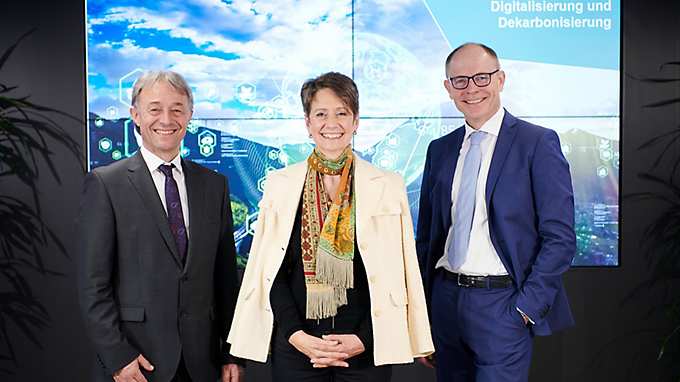
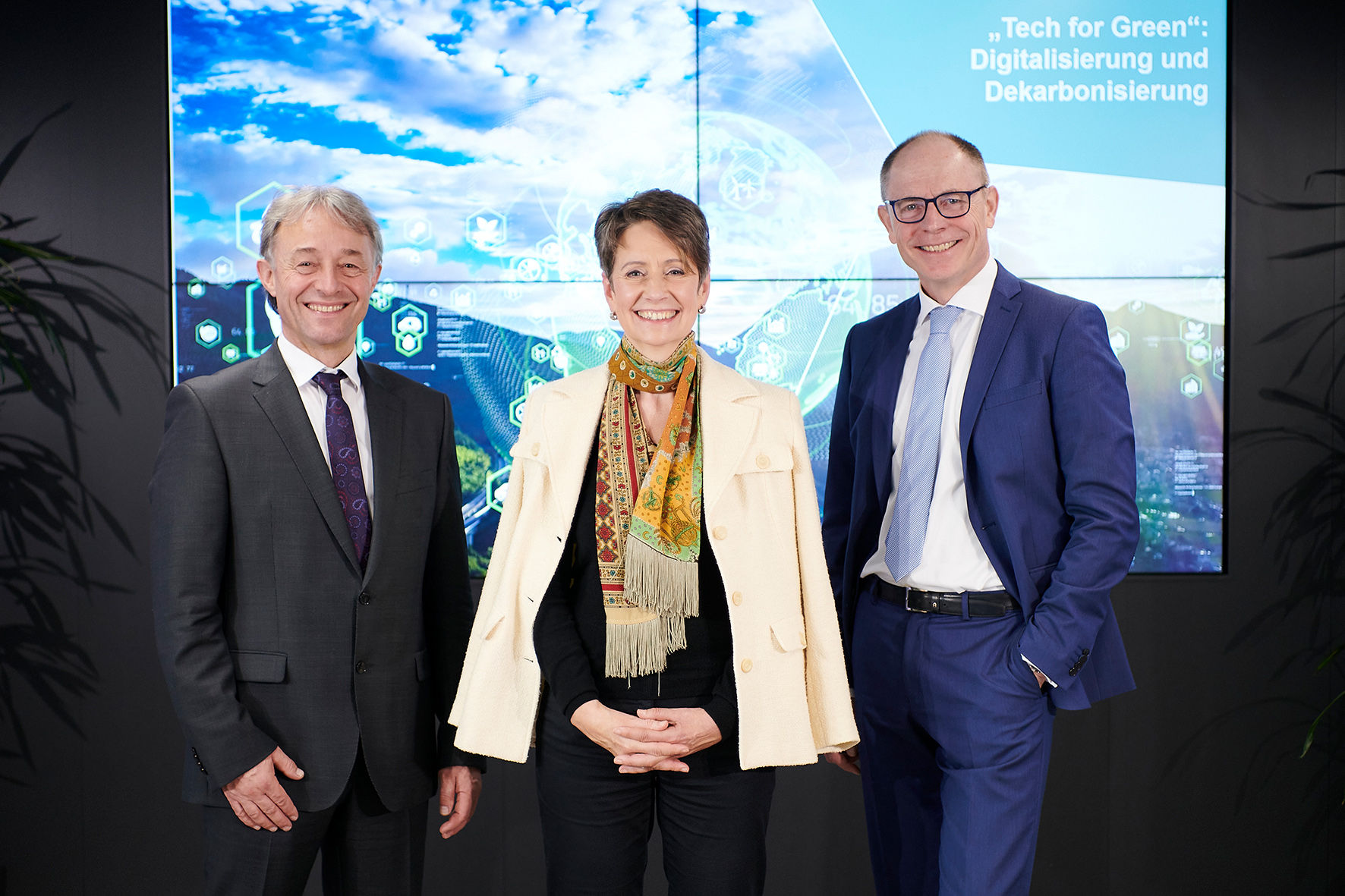
Jahrespressekonferenz Infineon Technologies Austria AG
v.l.n.r.: Thomas Reisinger, Vorstand für Operations Infineon Technologies Austria AG; Sabine Herlitschka, Vorstandsvorsitzende Infineon Technologies Austria AG; Oliver Heinrich, Finanzvorstand Infineon Technologies Austria AG
JPEG
1772x1181 px
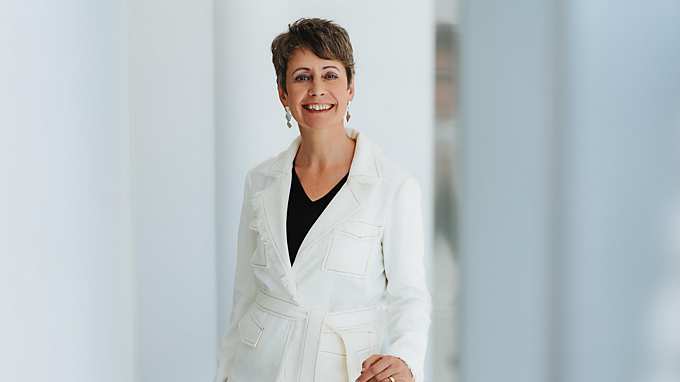
Sabine Herlitschka portrait picture - 9
Sabine Herlitschka, Vorstandsvorsitzende Infineon Technologies Austria AG
JPEG
6000x4000 px

Share in WeChat
Scan the QR code with your WeChat App to share this page.
Information Number : Geschaeftsjahr_22