- ASIC
- Battery management ICs
- Clocks and timing solutions
- ESD and surge protection devices
- Automotive Ethernet
- Evaluation Boards
- High reliability
- Isolation
- Memories
- Microcontroller
- Power
- RF
- Security and smart card solutions
- Sensor technology
- Small signal transistors and diodes
- Transceivers
- Universal Serial Bus (USB)
- Wireless connectivity
- Suchwerkzeuge
- Technologie
- Packages
- Produktinformationen
- Bezugsquellen
- Überblick
- Automotive Ethernet PHY for in-vehicle networking
- Automotive Ethernet Switches for in-vehicle networking
- Überblick
- Embedded flash IP solutions
- Flash+RAM MCP solutions
- F-RAM (Ferroelectric RAM)
- NOR flash
- nvSRAM (non-volatile SRAM)
- PSRAM – Pseudostatic RAM
- Radiation hardened and high-reliability memories
- SRAMs (Static Random Access Memory)
- Wafer and die memory solutions
- Überblick
- AURIX™ TriCore™ MCUs
- PSOC™ MCUs
- TRAVEO™ T2G MCUs
- XMC™ MCUs
- Legacy MCUs
- MOTIX™ motor control SoCs/SIPs
- Überblick
- AC-DC power conversion
- Automotive conventional powertrain ICs
- Class D audio amplifier ICs
- Contactless power and sensing ICs
- DC-DC converters
- Diodes and thyristors (Si/SiC)
- eFuses
- Gallium nitride (GaN)
- Gate Driver ICs
- IGBTs – Insulated gate bipolar transistors
- Intelligent power modules (IPM)
- JFETs
- LED driver ICs
- Motor drivers
- MOSFETs
- Power modules
- Power supply ICs
- Protection and monitoring ICs
- Silicon carbide (SiC)
- Smart power switches
- Solid state relays and isolators
- Wireless charging ICs
- Überblick
- Antenna cross switches
- Antenna tuners
- Bias and control
- Coupler
- Driver amplifiers
- Rad hard microwave and RF
- Low noise amplifiers (LNAs)
- RF diode
- RF switches
- RF transistors
- Wireless control receiver
- Überblick
- Calypso® products
- CIPURSE™ products
- Contactless memories
- OPTIGA™ embedded security solutions
- SECORA™ security solutions
- Security controllers
- Smart card modules
- Smart solutions for government ID
- Überblick
- ToF 3D image sensors
- Current sensors
- Gas sensors
- Inductive position sensors
- MEMS microphones
- Pressure sensors
- Radar sensors
- Magnetic position sensors
- Magnetic speed sensors
- Capacitive sensors
- Temperature sensors
- Battery sensors
- Digital X-ray
- Computed tomography
- Sensor interface ASICs
- Überblick
- Bipolar transistors
- Diodes
- Small signal/small power MOSFET
- Überblick
- Automotive transceivers
- Control communication
- Powerline communications
- Überblick
- USB 2.0 peripheral controllers
- USB 3.2 peripheral controllers
- USB hub controllers
- USB PD high-voltage microcontrollers
- USB-C AC-DC and DC-DC charging solutions
- USB-C charging port controllers
- USB-C Power Delivery controllers
- Überblick
- AIROC™ Automotive wireless
- AIROC™ Bluetooth® and multiprotocol
- AIROC™ connected MCU
- AIROC™ Wi-Fi + Bluetooth® combos
- AIROC™ Ultra-Wide Band Solutions
- Überblick
- Commercial off-the-shelf (COTs) memory portfolio
- Defense memory portfolio
- High-reliability power conversion and management
- Überblick
- NewSpace memory portfolio
- Radiation tolerant power
- Überblick
- Rad hard microwave and RF
- Radiation hardened power
- Space memory portfolio
- Überblick
- Parallel NOR flash
- SEMPER™ NOR flash family
- SEMPER™ X1 LPDDR flash
- Serial NOR flash
- Überblick
-
32-bit TriCore™ AURIX™ – TC2x
- Überblick
- AURIX™ family – TC21xL
- AURIX™ family – TC21xSC (wireless charging)
- AURIX™ family – TC22xL
- AURIX™ family – TC23xL
- AURIX™ family – TC23xLA (ADAS)
- AURIX™ family – TC23xLX
- AURIX™ family – TC264DA (ADAS)
- AURIX™ family – TC26xD
- AURIX™ family – TC27xT
- AURIX™ family – TC297TA (ADAS)
- AURIX™ family – TC29xT
- AURIX™ family – TC29xTT (ADAS)
- AURIX™ family – TC29xTX
- AURIX™ TC2x emulation devices
-
32-bit TriCore™ AURIX™ – TC3x
- Überblick
- AURIX™ family - TC32xLP
- AURIX™ family – TC33xDA
- AURIX™ family - TC33xLP
- AURIX™ family – TC35xTA (ADAS)
- AURIX™ family – TC36xDP
- AURIX™ family – TC37xTP
- AURIX™ family – TC37xTX
- AURIX™ family – TC38xQP
- AURIX™ family – TC39xXA (ADAS)
- AURIX™ family - TC39xXX/XP
- AURIX™ family – TC3Ex
- AURIX™ TC37xTE (emulation devices)
- AURIX™ TC39xXE (emulation devices)
- 32-bit TriCore™ AURIX™ – TC4x
- Überblick
- PSOC™ 4 Microcontroller: Arm® Cortex®-M0/M0+
- PSOC™ 4 HV Arm® Cortex®-M0+
- PSOC™ 5 LP Arm® Cortex®-M3
- PSOC™ 6 Arm® Cortex®-M4/M0+
- PSOC™ Multitouch Touchscreen Controller
- PSOC™ Control C3 Arm® Cortex®-M33
- PSOC™ Automotive 4: Arm® Cortex®-M0/M0+
- PSOC™ Edge Arm® Cortex® M55/M33
- PSOC™ Control C1 Arm® Cortex®-M0
- Überblick
- 32-bit TRAVEO™ T2G Arm® Cortex® for body
- 32-bit TRAVEO™ T2G Arm® Cortex® for cluster
- Überblick
- 32-bit XMC1000 industrial microcontroller Arm® Cortex®-M0
- 32-bit XMC4000 industrial microcontroller Arm® Cortex®-M4
- XMC5000 Industrial Microcontroller Arm® Cortex®-M4F
- 32-bit XMC7000 Industrial Microcontroller Arm® Cortex®-M7
- Überblick
- Legacy 32-bit MCU
- Legacy 8-bit/16-bit microcontroller
- Other legacy MCUs
- 32-bit FM Arm® Cortex® Microcontroller
- Sensing controllers
- Überblick
- AC-DC integrated power stage - CoolSET™
- AC-DC PWM and PFC controller
- Überblick
- Bridge rectifiers & AC switches
- CoolSiC™ Schottky diodes
- Diode bare dies
- Power stacks
- Silicon diodes
- Thyristor / Diode Power Modules
- Thyristor soft starter modules
- Thyristor/diode discs
- Überblick
- GaN bidirectional switches
- GaN smart
- GaN transistors (GaN HEMTs)
- GaN with integrated driver
- GaN bare dies
- Überblick
- Automotive gate driver ICs
- Gate Driver ICs for GaN HEMTs
- Gate Driver ICs for SiC MOSFETs
- Half-Bridge Gate Driver ICs
- High-Side Gate Driver ICs
- Isolated Gate Driver ICs
- Level-Shift Gate Driver ICs
- Low-Side Gate Driver ICs
- Three-Phase Gate Driver ICs
- Transformer Driver ICs
- Überblick
- AC-DC LED driver ICs
- Ballast IC
- DC-DC LED driver IC
- LED dimming interface IC
- Linear LED driver IC
- LITIX™ - Automotive LED Driver IC
- NFC wireless configuration IC with PWM output
- VCSEL driver
- Überblick
- BLDC motor drivers
- BDC motor drivers
- Stepper & servo motor drivers
- Motor drivers with MCU
- Bridge drivers with MOSFETs
- Gate Driver ICs
- Überblick
- Automotive MOSFET: 30 V to 800 V
- Dual MOSFETs
- MOSFET (Si & SiC) Modules
- N-channel depletion mode MOSFET
- N-channel MOSFETs
- P-channel MOSFETs
-
Silicon carbide CoolSiC™ MOSFETs
- Überblick
- Silicon Carbide MOSFET modules
- Silicon carbide MOSFET discretes
- Silicon carbide MOSFETs bare dies
- Silicon Carbide Bidirectional Switches
- 400 V / 440 V Silicon Carbide MOSFETs
- 650 V Silicon Carbide MOSFETs
- 750 V Silicon Carbide MOSFETs
- 1200 V Silicon Carbide MOSFETs
- 1700 V Silicon Carbide MOSFETs
- 2000 V Silicon Carbide MOSFETs
- 2300 V Silicon Carbide MOSFETs
- 3300 V Silicon Carbide MOSFETs
- Small signal/small power MOSFET
- Überblick
- IGBT modules
- MOSFET (Si & SiC) Modules
- Intelligent power modules (IPM)
- Diodes and thyristors (Si/SiC)
- Automotive IGBT and CoolSiC™ MOSFET modules
- High density power modules
- Überblick
- Automotive transceivers
- Linear voltage regulators
- Power management ICs (PMIC)
- Automotive switching regulators
- System Basis Chips (SBC)
- Überblick
- High-side switches
- Low-side switches
- Multichannel SPI Switches & Controller
- Automotive eFuses
- Überblick
- Radar sensors for automotive
- Radar sensors for IoT
- Überblick
- EZ-USB™ CX3 MIPI CSI2 to USB 3.0 camera controller
- EZ-USB™ FX10 & FX5N USB 10Gbps peripheral controller
- EZ-USB™ FX20 USB 20 Gbps peripheral controller
- EZ-USB™ FX3 USB 5 Gbps peripheral controller
- EZ-USB™ FX3S USB 5 Gbps peripheral controller with storage interface
- EZ-USB™ FX5 USB 5 Gbps peripheral controller
- EZ-USB™ SD3 USB 5 Gbps storage controller
- EZ-USB™ SX3 FIFO to USB 5 Gbps peripheral controller
- Überblick
- EZ-PD™ PMG1-B1 Battery Charge Controller with USB-C PD MCU
- EZ-PD™ PMG1-S0 high-voltage MCU with USB-C and PD
- EZ-PD™ PMG1-S1 high-voltage MCU with USB-C and PD
- EZ-PD™ PMG1-S2 high-voltage MCU with USB PD
- EZ-PD™ PMG1-S3 high-voltage MCU with USB-C & PD
- EZ-PD™ PMG1-B2 Battery Charge Controller with USB-C PD MCU
- Überblick
- EZ-PD™ CCG3 USB type-C port controller PD
- EZ-PD™ CCG3PA USB-C and PD
- EZ-PD™ CCG3PA-NFET USB-C PD controller
- EZ-PD™ CCG7x consumer USB-C Power Delivery & DC-DC controller
- EZ-PD™ PAG1: power adapter generation 1
- EZ-PD™ PAG2: Power Adapter Generation 2
- EZ-PD™ PAG2-PD USB-C PD Controller
- Überblick
- EZ-PD™ ACG1F one-port USB-C controller
- EZ-PD™ CCG2 USB Type-C port controller
- EZ-PD™ CCG3PA Automotive USB-C and Power Delivery controller
- EZ-PD™ CCG4 two-port USB-C and PD
- EZ-PD™ CCG5 dual-port and CCG5C single-port USB-C PD controllers
- EZ-PD™ CCG6 one-port USB-C & PD controller
- EZ-PD™ CCG6_CFP and EZ-PD™ CCG8_CFP Dual-Single-Port USB-C PD
- EZ-PD™ CCG6DF dual-port and CCG6SF single-port USB-C PD controllers
- EZ-PD™ CCG7D Automotive dual-port USB-C PD + DC-DC controller
- EZ-PD™ CCG7S Automotive single-port USB-C PD solution with a DC-DC controller + FETs
- EZ-PD™ CCG8 dual-single-port USB-C PD
- EZ-PD™ CMG1 USB-C EMCA controller
- EZ-PD™ CMG2 USB-C EMCA controller with EPR
Nach Architektur durchsuchen
Nach Technologien durchsuchen
- AKTUELLES IN
- Aerospace and defense
- AI and data center
- Automotive
- Communications
- Consumer electronics
- Industrial
- Security solutions
- Smart home and building
- Solutions
- Überblick
- Defense applications
- Space applications
- Überblick
- Data center power solutions
- Edge computing
- Machine Learning Edge AI
- Überblick
- ADAS & autonomous driving
- Automotive body electronics
- Automotive LED lighting systems
- Automotive zonal architecture
- Chassis control & safety
- Electric vehicle drivetrain system
- EV thermal management system
- In-vehicle infotainment & HMI
- Light electric vehicle solutions
- Überblick
- Satellite communications
- Telecommunications infrastructure
- Überblick
- AR and smart glasses
- Complete system solutions for smart TVs
- Digital health
- Drones
- Home appliances
- Mobile device and smartphone solutions
- Photovoltaic
- Power adapters and chargers
- Semiconductor solutions for home entertainment applications
- Smart conference systems
- Überblick
- Asset Tracking
- Battery energy storage (BESS)
- Battery formation and testing
- Digital health
- Electric forklifts
- EV charging
- High voltage solid-state power distribution
- Hydrogen electrolysis
- Industrial & Medical SMPS
- Industrial automation
- Industrial motor drives and controls
- Industrial robots
- LED lighting system design
- Light electric vehicle solutions
- Photovoltaic
- Power adapters and chargers
- Power tools
- Power transmission and distribution
- Robotics
- Traction
- Uninterruptible power supplies (UPS)
- Wind power
- Überblick
- Access control and ticketing
- Device authentication and brand protection
- Embedded security for the Internet of Things (IoT)
- eSIM applications
- Government identification
- Mobile security
- Payment solutions
- Überblick
- Domestic robots
- Heating ventilation and air conditioning (HVAC)
- Home and building automation
- PC accessories
- Semiconductor solutions for home entertainment applications
- Überblick
- Battery management systems (BMS)
- Connectivity
- Human Machine Interface
- Machine Learning Edge AI
- Motor control
- Power conversion
- Security
- Sensor solutions
- System diagnostics and analytics
- Überblick
- Data center power distribution
- FPGAs in datacenter applications
- Power system reliability modeling
-
Server rack power management
- Überblick
- AI accelerator cards
- AMD CPU voltage regulator ICs
- Ampere CPU voltage regulator ICs
- Intel CPU voltage regulator ICs
- Intermediate Bus Converter (IBC)
- Network switches for AI data centers and server racks
- Server battery backup units (BBU)
- Server power path protection
- Server power supply units (PSU)
- SmartNIC cards
- Überblick
- Automotive animated LED lighting system
- Automotive LED front single light functions
- Automotive LED rear single light functions
- Full LED headlight system - multi-channel LED driver
- LED driver solutions for electric two- and three-wheelers
- LED pixel light controller - supply & communication
- Static interior ambient LED light
- Überblick
- Active suspension control
- Automotive braking solutions
- Automotive steering solutions
- Chassis domain control
- Überblick
-
Automotive battery management system
- Überblick
- Automotive battery cell monitoring & balancing
- Automotive battery control unit (BCU)
- Automotive battery isolated communication
- Automotive battery management system (BMS) - 12 V to 24 V
- Automotive battery management system (BMS) - 48 V
- Automotive battery management system (BMS) - high-voltage
- Automotive battery pack monitoring
- Automotive battery passport & event logging
- Automotive battery protection & disconnection
- Automotive current sensing & coulomb counting
- BMS (electric two- & three-wheelers)
- Auxiliary inverter
- Auxiliary inverter - high-voltage (commercial vehicles)
- REEV engine & HV starter‑generator control
- DC-DC converter high-voltage
- DC-DC converter high-voltage (commercial vehicles)
- EV charging
- EV traction inverter
- FCEV powertrain solutions
- On-board charging (electric commercial vehicles)
- On-board charging (OBC)
- On-board charging (OBC) solutions for electric two- and three-wheelers
- Traction inverter (electric commercial vehicles)
- Traction inverter (electric two- & three-wheelers)
- Überblick
- Audio amplifier solutions
- Complete system solutions for smart TVs
- Distribution audio amplifier unit solutions
- Home theater installation speaker system solutions
- Party speaker solutions
- PoE audio amplifier unit solutions
- Portable speaker solutions
- Powered active speaker systems
- Remote control
- Smart speaker designs
- Soundbar solutions
- Überblick
- Disposable healthcare equipment
- Durable healthcare equipment
- Healthcare wearables
- Überblick
- Data center power solutions
- Digital input/output (I/O) modules
- DIN rail power supply solutions
- Home and building automation
- Industrial HMI Monitors and Panels
- Industrial motor drives and controls
- Industrial PC
- Industrial robots
- Machine vision
- Mobile robots (AGV, AMR)
- Programmable logic controller (PLC)
- Solid-state circuit breaker (SSCB)
- Uninterruptible power supplies (UPS)
- Überblick
- AC-DC power conversion
- DC-DC power conversion
- Überblick
- Power supply health monitoring
- AKTUELLES IN
- Digital documentation
- Boards & Kits
- Finder & selection tools
- Platforms
- Services
- Simulation & Modeling
- Software
- Tools
- Partners
- Maker
- University Alliance Program
- Überblick
- Bipolar Discs Finder
- Bipolar Module Finder
- Connected Secure Systems Finder
- Diode Rectifier Finder
- ESD Protection Finder
- Evaluation Board Finder
- Gate Driver Finder
- IGBT Discrete Finder
- IGBT Module Finder
- IPM Finder
- Microcontroller Finder
- MOSFET Finder
- PMIC Finder
- Product Finder
- PSOC™ and FMx MCU Board & Kit Finder
- Radar Finder
- Reference Design Finder
- Simulation Model Finder
- Smart Power Switch Finder
- Transceiver Finder
- Voltage Regulator Finder
- Wireless Connectivity Board & Kit Finder
- Infineon Gate Driver Recommendation Tool
- Überblick
- AIROC™ software & tools
- AURIX™ software & tools
- DRIVECORE™ for automotive software development
- iMOTION™ software & tools
- Infineon Smart Power Switches & Gate Driver Tool Suite
- MOTIX™ software & tools
- OPTIGA™ software & tools
- PSOC™ software & tools
- TRAVEO™ software & tools
- XENSIV™ software & tools
- XMC™ software & tools
- Überblick
- HiRel Fit Rate Tool
- Infineon Designer
- Interactive product sheet
- IPOSIM Online Power Simulation Platform
- InfineonSpice Offline Simulation Tool
- OPTIREG™ automotive power supply ICs Simulation Tool (PLECS)
- Power MOSFET Simulation Models
- PowerEsim Switch Mode Power Supply Design Tool
- Solution Finder
- XENSIV™ Magnetic Sensor Simulation Tool
- Überblick
- Configuration
- Hardware Development
- Programming & Testing
- SDK
- Tools Archive
- Utilities
- Überblick
- AURIX™ certifications
- AURIX™ development tools
-
AURIX™ Embedded Software
- Überblick
- AURIX™ Applications software
- AURIX™ Artificial Intelligence
- AURIX™ Gateway
- AURIX™ iLLD Drivers
- Infineon safety
- AURIX™ Security
- AURIX™ TC3xx Motor Control Application Kit
- AURIX™ TC4x SW application architecture
- Infineon AUTOSAR
- Communication and Connectivity
- Middleware
- Non AUTOSAR OS/RTOS
- OTA
- AURIX™ Microcontroller Kits
- Überblick
- TRAVEO™ Development Tools
- TRAVEO™ Embedded Software
- Überblick
- XENSIV™ Development Tools
- XENSIV™ Embedded Software
- XENSIV™ evaluation boards
- Überblick
- CAPSENSE™ Controllers Code Examples
- Memories for Embedded Systems Code Examples
- PSOC™ 1 Code Examples for PSOC™ Designer
- PSOC™ 3 Code Examples for PSOC™ Creator
- PSOC™ 3/4/5 Code Examples
- PSOC™ 4 Code Examples for PSOC™ Creator
- PSOC™ 6 Code Examples for PSOC™ Creator
- PSOC™ 63 Code Examples
- USB Controllers Code Examples
- Überblick
- AIROC™ Wi-Fi & Bluetooth EZ-Serial Module Firmware Platform
- AIROC™ Wi-Fi & Bluetooth Linux and Android Drivers
- emWin Graphics Library and GUI for PSOC™
- Infineon Complex Device Driver for Battery Management Systems
- Memory Solutions Hub
- PSOC™ 6 Peripheral Driver Library (PDL) for PSOC™ Creator
- USB Controllers EZ-USB™ GX3 Software and Drivers
- Überblick
- CAPSENSE™ Controllers Configuration Tools EZ-Click
- DC-DC Integrated POL Voltage Regulators Configuration Tool – PowIRCenter
- EZ-USB™ SX3 Configuration Utility
- FM+ Configuration Tools
- FMx Configuration Tools
- Tranceiver IC Configuration Tool
- USB EZ-PD™ Configuration Utility
- USB EZ-PD™ Dock Configuration Utility
- USB EZ-USB™ HX3C Blaster Plus Configuration Utility
- USB UART Config Utility
- XENSIV™ Tire Pressure Sensor Programming
- Überblick
- EZ-PD™ CCGx Dock Software Development Kit
-
FMx Softune IDE
- Überblick
- RealOS™ Real-Time Operating System
- Softune IDE Language tools
- Softune Workbench
- Tool Lineup for F2MC-16 Family SOFTUNE V3
- Tool Lineup for F2MC-8FX Family SOFTUNE V3
- Tool Lineup for FR Family SOFTUNE V6
- Virtual Starter Kit
- Windows 10 operation of released SOFTUNE product
- Windows 7 operation of released SOFTUNE product
- Windows 8 operation of released SOFTUNE product
- Infineon GUI Designer
- ModusToolbox™ Software
- PSOC™ Creator Software
- Radar Development Kit
- RUST
- USB Controllers SDK
- Wireless Connectivity Bluetooth Mesh Helper Applications
- XMC™ DAVE™ Software
- Überblick
- AIROC™ Bluetooth® Connect App Archive
- Cypress™ Programmer Archive
- EZ-PD™ CCGx Power Software Development Kit Archive
- ModusToolbox™ Software Archive
- PSOC™ Creator Archive
- PSOC™ Designer Archive
- PSOC™ Programmer Archive
- USB EZ-PD™ Configuration Utility Archives
- USB EZ-PD™ Host SDK Archives
- USB EZ-USB™ FX3 Archive
- USB EZ-USB™ HX3PD Configuration Utility Archive
- WICED™ Smart SDK Archive
- WICED™ Studio Archive
- Überblick
- Infineon Developer Center Launcher
- Infineon Register Viewer
- Pin and Code Wizard
- Timing Solutions
- Wireless Connectivity
- AKTUELLES IN
- Support
- Training
- Infineon Developer Community
- Neueste Nachrichten
Wirtschaftspresse
Okt. 22, 2026
Wirtschaftspresse
Okt. 21, 2026
Wirtschaftspresse
Okt. 19, 2026
Wirtschaftspresse
Okt. 15, 2026
- Unternehmen
- Unsere Geschichten
- Events
- Presse
- Investor
- Karriere
- Qualität
- Neueste Nachrichten
Wirtschaftspresse
Okt. 22, 2026
Wirtschaftspresse
Okt. 21, 2026
Wirtschaftspresse
Okt. 19, 2026
Wirtschaftspresse
Okt. 15, 2026
Österreichische Forschung ebnet Weg für superschnelle Quantencomputer
Wirtschaftspresse
Infineon Austria forscht mit der Universität Innsbruck und der JOANNEUM RESEARCH an ionenbasierten Prozessoren mit integrierter Optik. Ziel ist es, mit den Forschungen die Basis zu liefern, um 100 und mehr Qubits miteinander verschränken zu können. Damit wären Rechenaufgaben lösbar, an denen die besten Supercomputer heute noch scheitern.
Quantencomputer haben das Potenzial, bestimmte komplexe und rechenintensive Aufgaben um ein Vielfaches schneller zu lösen als klassische Computer. Während herkömmliche Computer Rechenkombinationen für verschiedene Szenarien nacheinander ausführen, kann ein Quantencomputer alle Rechenkombinationen gleichzeitig berücksichtigen. So könnten beispielsweise Medikamente für die Krebsforschung, Impfstoffe oder neue Materialien rascher entwickelt, die abhörsichere Kommunikation verbessert oder Optimierungen von Logistik- oder Finanzdaten noch effizienter werden.
Weltweite Forschung
Die Wachstumsperspektiven für Quantencomputer sind weitreichend und sollen laut Studien eine Wertschöpfung von bis zu 850 Milliarden Dollar bis 2050 generieren. Die Quantenforschungen laufen weltweit. Das österreichische Forschungsprojekt „OptoQuant“ (Optically Integrated Quantum Computing), welches mit der Universität Innsbruck, der JOANNEUM RESEARCH unter der Leitung von Infineon Austria umgesetzt wird, will jetzt das nächste Level ultraschneller und vor allem auch industrialisierbarer Quantentechnologien vorantreiben.
Sabine Herlitschka, Vorstandsvorsitzende Infineon Technologies Austria: „Diese Forschungsallianz von Industrie und Wissenschaft beschleunigt deutlich die Entwicklung marktfähiger Quantencomputer. Auf dem Gebiet der Quantencomputer Forschung herrscht aktuell ein massiver globaler Wettbewerb. Gemeinsam mit starken Partnern haben wir die Chance, bei diesem zentralen Zukunftsthema ganz vorne dabei zu sein und so diese Chance für Europa zu nutzen.“
Quantenprozessor mit integrierter Optik
Ziel des kooperativen Forschungsprojektes ist es, ionenbasierte Quantenprozessoren mit integrierten optischen Schnittstellen zu entwickeln. Das soll die Zuverlässigkeit, die Präzision der Rechenoperationen als auch die Anzahl kontrollierbarer Qubits erhöhen. Der Weg hin zu hochskalierten Quantencomputern soll damit beschleunigt werden. Die Voraussetzungen dafür wurden bereits im von Infineon Austria geleiteten europäischen Forschungsprojekt „ Piedmons“ geschaffen, indem neuartige Quantenprozessoren auf Ionenbasis entwickelt und für die industrielle Realisierung optimiert wurden.
Vom Standardchip zum Quantenchip
Während klassische Computer mit Bits, also „Einsen“ und „Nullen“, arbeiten und zwei Zustände „Ein“ und „Aus“ angeben, nutzen Quantencomputer sogenannte Quantenbits, kurz „Qubits“. Das Besondere: Sie können beide Zustände gleichzeitig einnehmen. Diese Eigenschaft wird Superposition genannt, erlaubt die Ausführung der parallelen Rechenoperationen und lässt den Quantencomputer bestimmte Aufgaben daher auch superschnell lösen.
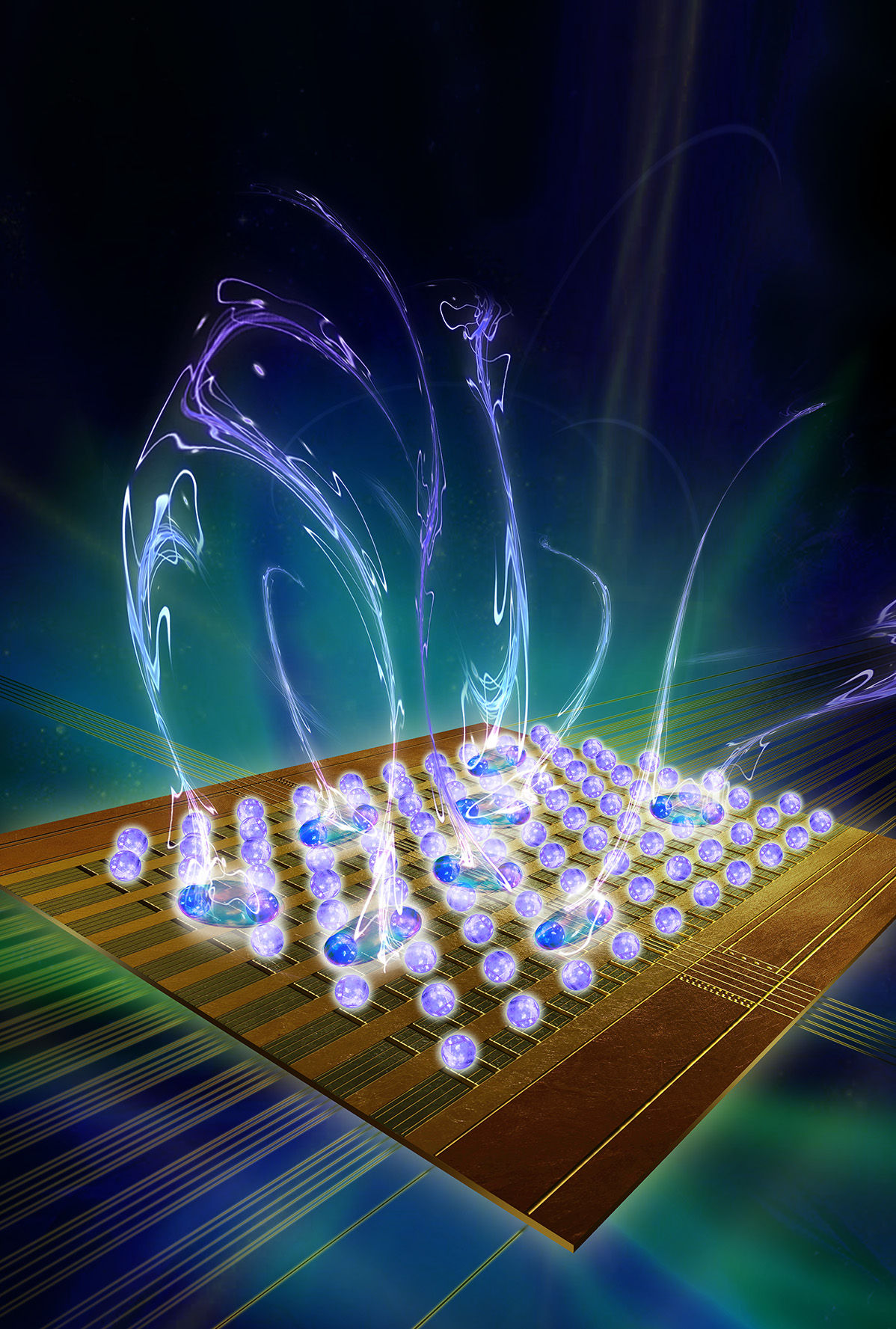
Doch die Qubits sind extrem empfindlich und nur für Bruchteile einer Sekunde stabil. In einer Vakuumkammer können jedoch Ionen mittels elektrischer Felder gut von der Umgebung isoliert gefangen werden und durch die Manipulation mittels Laserstrahlen als Qubits verwendet werden. Je mehr Qubits implementiert und verschränkt werden können, umso mehr Rechenkapazität hat der Quantencomputer.
Forschung für nächstes Quantenlevel
Das fordert die Forschung weltweit, denn zurzeit sind alle Quantencomputer durch die Anzahl der verschränkten Qubits und die Präzision der Rechenoperationen limitiert. Für praktisch relevante Aufgaben werden mindestens 50 verschränkte Qubits benötigt, um einen Geschwindigkeitsvorteil gegenüber klassischen Supercomputern zu erzielen. Im Quantenlabor in Innsbruck können aktuell 24 Ionen individuell kontrolliert und verschränkt werden.
Durch die Forschungen im Projekt „OptoQuant“ sollen mikrostrukturierte 3D Ionenfallen für das Speichern von 50 bis 100 Ionen mit integrierter Optik geschaffen werden. Das soll die Basis schaffen, um Ionenfallen-Quantenprozessoren zuverlässiger und präziser zu machen und die Anzahl kontrollierbarer Qubits signifikant erhöhen.
Grundlagenexzellenz und industrielle Expertise
Das Projekt vereint eine akademisch-industrielles Konsortium mit weltweit beachteter Expertise. So nimmt das Institut für Experimentalphysik an der Universität Innsbruck bereits seit über zwei Jahrzehnten international eine führende Rolle in der Quantenforschung mit Ionenfallen ein.
„Für die Skalierung unserer Quantenprozessoren auf eine größere Anzahl von Qubits und für deren Ansteuerung sind industrielle Techniken unerlässlich. Zusammen mit der JOANNEUM RESEARCH und Infineon Austria haben wir nun die Expertise, den Innsbrucker Quantenprozessor mit Industriestandards weiterzuentwickeln“, sagt Quantencomputer-Pionier Rainer Blatt von der Universität Innsbruck.
MATERIALS, das Institut für Oberflächentechnologien und Photonik der JOANNEUM RESEARCH hat fundierte Erfahrung im Bereich der 3D-Lithographie und integrierter Optiken. Wolfgang Pribyl, Geschäftsführer der JOANNEUM RESEARCH: „Mit diesem Projekt könnte ein erster großer Schritt in Richtung Miniaturisierung des Herzstücks eines Quantencomputers gelingen. Wir werden gemeinsam dazulernen und Neuland betreten, denn die Realisierung von Quantencomputern würde auf alle Fälle einen Paradigmenwechsel in der Informationstechnologie bedeuten. Wir sind stolz, dass wir die langjährig aufgebaute Kompetenz in der Laserlithographie – und vor allem die in der Zweiphotonen-Laserlithographie – nun in eine völlig neue und hoch komplexe Anwendung bringen können.“
Infineon bringt seine Expertise als Halbleiterhersteller mit hoher Kompetenz in der Skalierung und Fertigungsprozessen ein. Durch die gemeinsame Forschung wird das Know-how vertieft und Österreichs Position an der Spitze der quantentechnologischen Forschung gestärkt.
Das Quantenforschungsprojekt „OptoQuant“ läuft drei Jahre (01.06.2021 bis 31.05.2024) und umfasst ein Forschungsvolumen von 2,7 Millionen Euro. Unterstützt wird es im Rahmen der „Quantenforschung und Technologie“ Initiative der Nationalstiftung für Forschung, Technologie und Entwicklung und der österreichischen Forschungsförderungsgesellschaft FFG.
Weitere Links:
Infineon Quantencomputer als Game Changer von morgen
Universität Innsbruck Institut für Experimentalphysik
JOANNEUM RESEARCH Materials Institut
Die Infineon Technologies Austria AG ist ein Tochterunternehmen der Infineon Technologies AG, eines weltweit führenden Anbieters von Halbleiterlösungen, die das Leben einfacher, sicherer und umweltfreundlicher machen. Mikroelektronik von Infineon senkt den Energieverbrauch von Unterhaltungselektronik, Haushaltsgeräten und Industrieanlagen. Sie trägt wesentlich zu Komfort, Sicherheit und Nachhaltigkeit von Fahrzeugen bei und ermöglicht sichere Transaktionen im Internet der Dinge.
Infineon Austria bündelt die Kompetenzen für Forschung & Entwicklung, Fertigung sowie globale Geschäftsverantwortung. Der Hauptsitz befindet sich in Villach, weitere Niederlassungen in Graz, Klagenfurt, Linz und Wien. Mit 4.517 Beschäftigten (davon 1.960 in Forschung & Entwicklung) aus 70 Nationen erzielte das Unternehmen im Geschäftsjahr 2020 (Stichtag: 30. September) einen Umsatz von 3,1 Milliarden Euro. Mit einem Forschungsaufwand von 498 Millionen Euro ist Infineon Austria eines der forschungsstärksten Unternehmen Österreichs.
Pressefotos
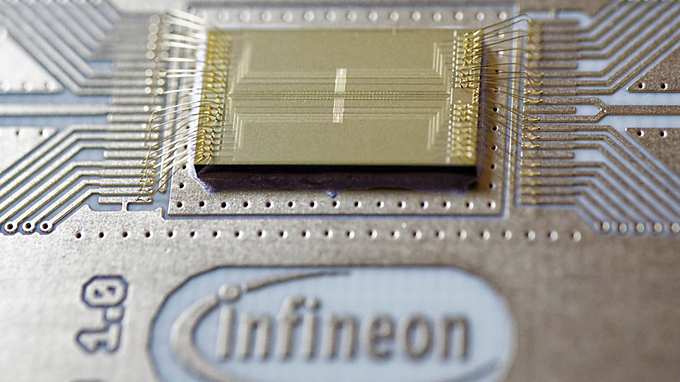
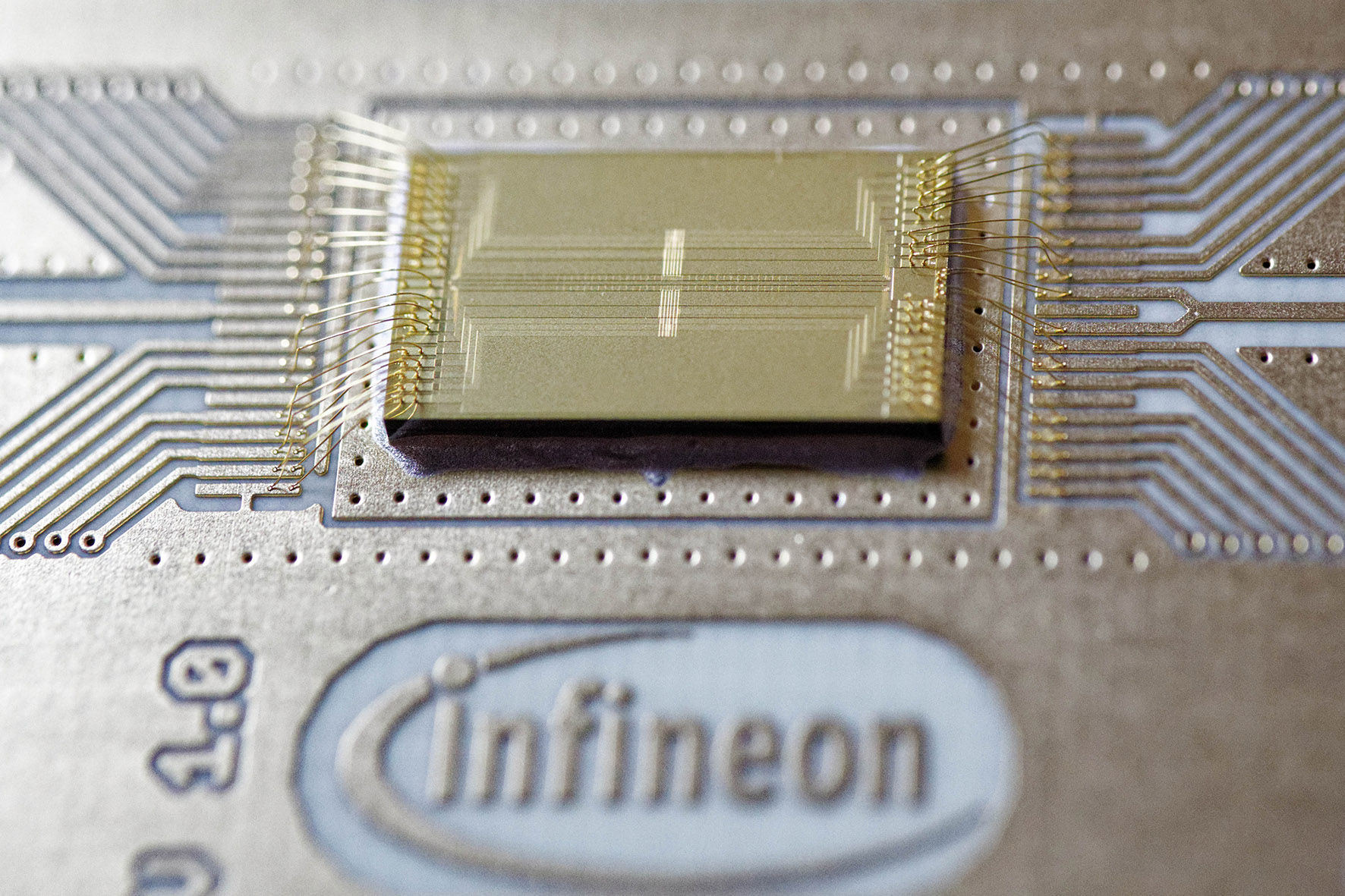
quantenprozessor infineon austria
Prototyp eines Ionenfallen-Chips für Quantencomputer entwickelt und gefertigt am Infineon Standort Villach.
JPEG
1772x1181 px

Ion trap ©University of Innsbruck/Harald Ritsch
Qubits werden in Ionenfallen gefangen und dann von Lasern, die rund um die Ionenfalle verbaut sind, angestrahlt und in bestimmte Zustände versetzt. Im Forschungsprojekt „OptoQuant“ arbeitet das Team an Ionenfallen mit integrierter Optik auf Basis moderner Halbleiter-Fertigungsprozessen. ©Uni Innsbruck/Harald Ritsch
JPEG
1198x1777 px
Share in WeChat
Scan the QR code with your WeChat App to share this page.
Information Number : Quantenprojekt-Optoquant