
- ASIC
- Battery management ICs
- Clocks and timing solutions
- ESD and surge protection devices
- Automotive Ethernet
- Evaluation Boards
- High reliability
- Isolation
- Memories
- Microcontroller
- Power
- RF
- Security and smart card solutions
- Sensor technology
- Small signal transistors and diodes
- Transceivers
- Universal Serial Bus (USB)
- Wireless connectivity
- Suchwerkzeuge
- Technologie
- Packages
- Produktinformationen
- Bezugsquellen
- Überblick
- Automotive Ethernet PHY for in-vehicle networking
- Automotive Ethernet Switches for in-vehicle networking
- Überblick
- Embedded flash IP solutions
- Flash+RAM MCP solutions
- F-RAM (Ferroelectric RAM)
- NOR flash
- nvSRAM (non-volatile SRAM)
- PSRAM – Pseudostatic RAM
- Radiation hardened and high-reliability memories
- SRAMs (Static Random Access Memory)
- Wafer and die memory solutions
- Überblick
- AURIX™ TriCore™ MCUs
- PSOC™ MCUs
- TRAVEO™ T2G MCUs
- XMC™ MCUs
- Legacy MCUs
- MOTIX™ motor control SoCs/SIPs
- Überblick
- AC-DC power conversion
- Automotive conventional powertrain ICs
- Class D audio amplifier ICs
- Contactless power and sensing ICs
- DC-DC converters
- Diodes and thyristors (Si/SiC)
- eFuses
- Gallium nitride (GaN)
- Gate Driver ICs
- IGBTs – Insulated gate bipolar transistors
- Intelligent power modules (IPM)
- JFETs
- LED driver ICs
- Motor drivers
- MOSFETs
- Power modules
- Power supply ICs
- Protection and monitoring ICs
- Silicon carbide (SiC)
- Smart power switches
- Solid state relays and isolators
- Wireless charging ICs
- Überblick
- Antenna cross switches
- Antenna tuners
- Bias and control
- Coupler
- Driver amplifiers
- Rad hard microwave and RF
- Low noise amplifiers (LNAs)
- RF diode
- RF switches
- RF transistors
- Wireless control receiver
- Überblick
- Calypso® products
- CIPURSE™ products
- Contactless memories
- OPTIGA™ embedded security solutions
- SECORA™ security solutions
- Security controllers
- Smart card modules
- Smart solutions for government ID
- Überblick
- ToF 3D image sensors
- Current sensors
- Gas sensors
- Inductive position sensors
- MEMS microphones
- Pressure sensors
- Radar sensors
- Magnetic position sensors
- Magnetic speed sensors
- Capacitive sensors
- Temperature sensors
- Battery sensors
- Digital X-ray
- Computed tomography
- Sensor interface ASICs
- Überblick
- Bipolar transistors
- Diodes
- Small signal/small power MOSFET
- Überblick
- Automotive transceivers
- Control communication
- Powerline communications
- Überblick
- USB 2.0 peripheral controllers
- USB 3.2 peripheral controllers
- USB hub controllers
- USB PD high-voltage microcontrollers
- USB-C AC-DC and DC-DC charging solutions
- USB-C charging port controllers
- USB-C Power Delivery controllers
- Überblick
- AIROC™ Automotive wireless
- AIROC™ Bluetooth® and multiprotocol
- AIROC™ connected MCU
- AIROC™ Wi-Fi + Bluetooth® combos
- AIROC™ Ultra-Wide Band Solutions
- Überblick
- Commercial off-the-shelf (COTs) memory portfolio
- Defense memory portfolio
- High-reliability power conversion and management
- Überblick
- NewSpace memory portfolio
- Radiation tolerant power
- Überblick
- Rad hard microwave and RF
- Radiation hardened power
- Space memory portfolio
- Überblick
- Parallel NOR flash memory
- SEMPER™ NOR flash family
- SEMPER™ X1 LPDDR flash
- Serial NOR flash
- Überblick
-
AURIX™ TC2x - 32-bit TriCore™
- Überblick
- AURIX™ family – TC21xL
- AURIX™ family – TC21xSC (wireless charging)
- AURIX™ family – TC22xL
- AURIX™ family – TC23xL
- AURIX™ family – TC23xLA (ADAS)
- AURIX™ family – TC23xLX
- AURIX™ family – TC264DA (ADAS)
- AURIX™ family – TC26xD
- AURIX™ family – TC27xT
- AURIX™ family – TC297TA (ADAS)
- AURIX™ family – TC29xT
- AURIX™ family – TC29xTT (ADAS)
- AURIX™ family – TC29xTX
- AURIX™ TC2x emulation devices
-
AURIX™ TC3x - 32-bit TriCore™
- Überblick
- AURIX™ family - TC32xLP
- AURIX™ family – TC33xDA
- AURIX™ family - TC33xLP
- AURIX™ family – TC35xTA (ADAS)
- AURIX™ family – TC36xDP
- AURIX™ family – TC37xTP
- AURIX™ family – TC37xTX
- AURIX™ family – TC38xQP
- AURIX™ family – TC39xXA (ADAS)
- AURIX™ family - TC39xXX/XP
- AURIX™ family – TC3Ex
- AURIX™ TC37xTE (emulation devices)
- AURIX™ TC39xXE (emulation devices)
- AURIX™ TC4x - 32-bit TriCore™
- Überblick
- PSOC™ 4 Microcontroller: Arm® Cortex®-M0/M0+
- PSOC™ 4 HV Arm® Cortex®-M0+
- PSOC™ 5 LP Arm® Cortex®-M3
- PSOC™ 6 Arm® Cortex®-M4/M0+
- PSOC™ Multitouch Touchscreen Controller
- PSOC™ Control C3 Arm® Cortex®-M33
- PSOC™ Automotive 4: Arm® Cortex®-M0/M0+
- PSOC™ Edge Arm® Cortex® M55/M33
- PSOC™ Control C1 Arm® Cortex®-M0
- Überblick
- 32-bit TRAVEO™ T2G Arm® Cortex® for body
- 32-bit TRAVEO™ T2G Arm® Cortex® for cluster
- Überblick
- 32-bit XMC1000 industrial microcontroller Arm® Cortex®-M0
- 32-bit XMC4000 industrial microcontroller Arm® Cortex®-M4
- XMC5000 Industrial Microcontroller Arm® Cortex®-M4F
- 32-bit XMC7000 Industrial Microcontroller Arm® Cortex®-M7
- Überblick
- Legacy 32-bit MCU
- Legacy 8-bit/16-bit microcontroller
- Other legacy MCUs
- 32-bit FM Arm® Cortex® Microcontroller
- Sensing controllers
- Überblick
- AC-DC integrated power stage - CoolSET™
- AC-DC PWM and PFC controller
- Überblick
- Bridge rectifiers & AC switches
- CoolSiC™ Schottky diodes
- Diode bare dies
- Power stacks
- Silicon diodes
- Thyristor / Diode Power Modules
- Thyristor soft starter modules
- Thyristor/diode discs
- Überblick
- GaN bidirectional switches
- GaN smart
- GaN transistors (GaN HEMTs)
- GaN with integrated driver
- GaN bare dies
- Überblick
- Automotive gate driver ICs
- Gate Driver ICs for GaN HEMTs
- Gate Driver ICs for SiC MOSFETs
- Half-Bridge Gate Driver ICs
- High-Side Gate Driver ICs
- Isolated Gate Driver ICs
- Level-Shift Gate Driver ICs
- Low-Side Gate Driver ICs
- Three-Phase Gate Driver ICs
- Transformer Driver ICs
- Überblick
- AC-DC LED driver ICs
- Ballast IC
- DC-DC LED driver IC
- LED dimming interface IC
- Linear LED driver IC
- LITIX™ - Automotive LED Driver IC
- NFC wireless configuration IC with PWM output
- VCSEL driver
- Überblick
- BLDC motor drivers
- BDC motor drivers
- Stepper & servo motor drivers
- Motor drivers with MCU
- Bridge drivers with MOSFETs
- Gate Driver ICs
- Überblick
- Automotive MOSFET: 30 V to 800 V
- Dual MOSFETs
- MOSFET (Si & SiC) Modules
- N-channel depletion mode MOSFET
- N-channel MOSFETs
- P-channel MOSFETs
-
Silicon carbide CoolSiC™ MOSFETs
- Überblick
- Silicon Carbide MOSFET modules
- Silicon carbide MOSFET discretes
- Silicon carbide MOSFETs bare dies
- Silicon Carbide Bidirectional Switches
- 400 V / 440 V Silicon Carbide MOSFETs
- 650 V Silicon Carbide MOSFETs
- 750 V Silicon Carbide MOSFETs
- 1200 V Silicon Carbide MOSFETs
- 1700 V Silicon Carbide MOSFETs
- 2000 V Silicon Carbide MOSFETs
- 2300 V Silicon Carbide MOSFETs
- 3300 V Silicon Carbide MOSFETs
- Small signal/small power MOSFET
- Überblick
- IGBT modules
- MOSFET (Si & SiC) Modules
- Intelligent power modules (IPM)
- Diodes and thyristors (Si/SiC)
- Automotive IGBT and CoolSiC™ MOSFET modules
- High density power modules
- Überblick
- Automotive transceivers
- Linear voltage regulators
- Power management ICs (PMIC)
- Automotive switching regulators
- System Basis Chips (SBC)
- Überblick
- High-side switches
- Low-side switches
- Multichannel SPI Switches & Controller
- Automotive eFuses
- Überblick
- Radar sensors for automotive
- Radar sensors for IoT
- Überblick
- EZ-USB™ CX3 MIPI CSI2 to USB 3.0 camera controller
- EZ-USB™ FX10 & FX5N USB 10Gbps peripheral controller
- EZ-USB™ FX20 USB 20 Gbps peripheral controller
- EZ-USB™ FX3 USB 5 Gbps peripheral controller
- EZ-USB™ FX3S USB 5 Gbps peripheral controller with storage interface
- EZ-USB™ FX5 USB 5 Gbps peripheral controller
- EZ-USB™ SD3 USB 5 Gbps storage controller
- EZ-USB™ SX3 FIFO to USB 5 Gbps peripheral controller
- Überblick
- EZ-PD™ PMG1-B1 Battery Charge Controller with USB-C PD MCU
- EZ-PD™ PMG1-S0 high-voltage MCU with USB-C and PD
- EZ-PD™ PMG1-S1 high-voltage MCU with USB-C and PD
- EZ-PD™ PMG1-S2 high-voltage MCU with USB PD
- EZ-PD™ PMG1-S3 high-voltage MCU with USB-C & PD
- EZ-PD™ PMG1-B2 Battery Charge Controller with USB-C PD MCU
- Überblick
- EZ-PD™ CCG3 USB type-C port controller PD
- EZ-PD™ CCG3PA USB-C and PD
- EZ-PD™ CCG3PA-NFET USB-C PD controller
- EZ-PD™ CCG7x consumer USB-C Power Delivery & DC-DC controller
- EZ-PD™ PAG1: power adapter generation 1
- EZ-PD™ PAG2: Power Adapter Generation 2
- EZ-PD™ PAG2-PD USB-C PD Controller
- Überblick
- EZ-PD™ ACG1F one-port USB-C controller
- EZ-PD™ CCG2 USB Type-C port controller
- EZ-PD™ CCG3PA Automotive USB-C and Power Delivery controller
- EZ-PD™ CCG4 two-port USB-C and PD
- EZ-PD™ CCG5 dual-port and CCG5C single-port USB-C PD controllers
- EZ-PD™ CCG6 one-port USB-C & PD controller
- EZ-PD™ CCG6_CFP and EZ-PD™ CCG8_CFP Dual-Single-Port USB-C PD
- EZ-PD™ CCG6DF dual-port and CCG6SF single-port USB-C PD controllers
- EZ-PD™ CCG7D Automotive dual-port USB-C PD + DC-DC controller
- EZ-PD™ CCG7S Automotive single-port USB-C PD solution with a DC-DC controller + FETs
- EZ-PD™ CCG8 dual-single-port USB-C PD
- EZ-PD™ CMG1 USB-C EMCA controller
- EZ-PD™ CMG2 USB-C EMCA controller with EPR
Nach Architektur durchsuchen
Nach Technologien durchsuchen
- AKTUELLES IN
- Aerospace and defense
- AI and data center
- Automotive
- Communications
- Consumer electronics
- Industrial
- Security solutions
- Smart home and building
- Solutions
- Überblick
- Defense applications
- Space applications
- Überblick
- Data center power solutions
- Edge computing
- Machine Learning Edge AI
- Überblick
- ADAS & autonomous driving
- Automotive body electronics
- Automotive LED lighting systems
- Automotive zonal architecture
- Chassis control & safety
- Electric vehicle drivetrain system
- EV thermal management system
- In-vehicle infotainment & HMI
- Light electric vehicle solutions
- Überblick
- Satellite communications
- Telecommunications infrastructure
- Überblick
- PC accessories
- AR and smart glasses
- Complete system solutions for smart TVs
- Consumer wearables
- Drones
- Home appliances
- Mobile device and smartphone solutions
- Photovoltaic
- Power adapters and chargers
- Semiconductor solutions for home entertainment applications
- Smart conference systems
- Überblick
- Asset Tracking
- Battery energy storage (BESS)
- Battery formation and testing
- Digital health
- Electric forklifts
- EV charging
- High voltage solid-state power distribution
- Hydrogen electrolysis
- Industrial & Medical SMPS
- Industrial automation
- Industrial motor drives and controls
- Industrial robots
- LED lighting system design
- Light electric vehicle solutions
- Photovoltaic
- Power adapters and chargers
- Power tools
- Power transmission and distribution
- Robotics
- Traction
- Uninterruptible power supplies (UPS)
- Wind power
- Überblick
- Access control and ticketing
- Device authentication and brand protection
- Embedded security for the Internet of Things (IoT)
- eSIM applications
- Government identification
- Mobile security
- Payment solutions
- Überblick
- Heating ventilation and air conditioning (HVAC)
- Home and building automation
- Überblick
- Battery management systems (BMS)
- Connectivity
- Human Machine Interface
- Machine Learning Edge AI
- Motor control
- Power conversion
- Security
- Sensor solutions
- System diagnostics and analytics
- Überblick
- Data center power distribution
- FPGAs in datacenter applications
- Power system reliability modeling
-
Server rack power management
- Überblick
- AI accelerator cards
- AMD CPU voltage regulator ICs
- Ampere CPU voltage regulator ICs
- Intel CPU voltage regulator ICs
- Intermediate Bus Converter (IBC)
- Network switches for AI data centers and server racks
- Server battery backup units (BBU)
- Server power path protection
- Server power supply units (PSU)
- SmartNIC cards
- Überblick
- Automotive animated LED lighting system
- Automotive LED front single light functions
- Automotive LED rear single light functions
- Full LED headlight system - multi-channel LED driver
- LED driver solutions for electric two- and three-wheelers
- LED pixel light controller - supply & communication
- Static interior ambient LED light
- Überblick
- Active suspension control
- Automotive braking solutions
- Automotive steering solutions
- Chassis domain control
- Überblick
-
Automotive battery management system
- Überblick
- Automotive battery cell monitoring & balancing
- Automotive battery control unit (BCU)
- Automotive battery isolated communication
- Automotive battery management system (BMS) - 12 V to 24 V
- Automotive battery management system (BMS) - 48 V
- Automotive battery management system (BMS) - high-voltage
- Automotive battery pack monitoring
- Automotive battery passport & event logging
- Automotive battery protection & disconnection
- Automotive current sensing & coulomb counting
- BMS (electric two- & three-wheelers)
- Auxiliary inverter
- Auxiliary inverter - high-voltage (commercial vehicles)
- REEV engine & HV starter‑generator control
- DC-DC converter high-voltage
- DC-DC converter high-voltage (commercial vehicles)
- EV charging
- EV traction inverter
- FCEV powertrain solutions
- On-board charging (electric commercial vehicles)
- On-board charging (OBC)
- On-board charging (OBC) solutions for electric two- and three-wheelers
- Traction inverter (electric commercial vehicles)
- Traction inverter (electric two- & three-wheelers)
- Überblick
- Audio amplifier solutions
- Complete system solutions for smart TVs
- Distribution audio amplifier unit solutions
- Home theater installation speaker system solutions
- Party speaker solutions
- PoE audio amplifier unit solutions
- Portable speaker solutions
- Powered active speaker systems
- Remote control
- Smart speaker designs
- Soundbar solutions
- Überblick
- Data center power solutions
- Digital input/output (I/O) modules
- DIN rail power supply solutions
- Home and building automation
- Industrial HMI Monitors and Panels
- Industrial motor drives and controls
- Industrial PC
- Industrial robots
- Machine vision
- Mobile robots (AGV, AMR)
- Solid-state circuit breaker (SSCB)
- Uninterruptible power supplies (UPS)
- Überblick
- AC-DC power conversion
- DC-DC power conversion
- Überblick
- Power supply health monitoring
- AKTUELLES IN
- Digital documentation
- Boards & Kits
- Finder & selection tools
- Platforms
- Services
- Simulation & Modeling
- Software
- Tools
- Partners
- Maker
- University Alliance Program
- Überblick
- Bipolar Discs Finder
- Bipolar Module Finder
- Connected Secure Systems Finder
- Diode Rectifier Finder
- ESD Protection Finder
- Evaluation Board Finder
- Gate Driver Finder
- IGBT Discrete Finder
- IGBT Module Finder
- IPM Finder
- Microcontroller Finder
- MOSFET Finder
- PMIC Finder
- Product Finder
- PSOC™ and FMx MCU Board & Kit Finder
- Radar Finder
- Reference Design Finder
- Simulation Model Finder
- Smart Power Switch Finder
- Transceiver Finder
- Voltage Regulator Finder
- Wireless Connectivity Board & Kit Finder
- Infineon Gate Driver Recommendation Tool
- Überblick
- AIROC™ software & tools
- AURIX™ software & tools
- DRIVECORE™ for automotive software development
- iMOTION™ software & tools
- Infineon Smart Power Switches & Gate Driver Tool Suite
- MOTIX™ software & tools
- OPTIGA™ software & tools
- PSOC™ software & tools
- TRAVEO™ software & tools
- XENSIV™ software & tools
- XMC™ software & tools
- Überblick
- HiRel Fit Rate Tool
- Infineon Designer
- Interactive product sheet
- IPOSIM Online Power Simulation Platform
- InfineonSpice Offline Simulation Tool
- OPTIREG™ automotive power supply ICs Simulation Tool (PLECS)
- Power MOSFET Simulation Models
- PowerEsim Switch Mode Power Supply Design Tool
- Solution Finder
- XENSIV™ Magnetic Sensor Simulation Tool
- Überblick
- Configuration
- Hardware Development
- Programming & Testing
- SDK
- Tools Archive
- Utilities
- Überblick
- AURIX™ certifications
- AURIX™ development tools
-
AURIX™ Embedded Software
- Überblick
- AURIX™ Applications software
- AURIX™ Artificial Intelligence
- AURIX™ Gateway
- AURIX™ iLLD Drivers
- Infineon safety
- AURIX™ Security
- AURIX™ TC3xx Motor Control Application Kit
- AURIX™ TC4x SW application architecture
- Infineon AUTOSAR
- Communication and Connectivity
- Middleware
- Non AUTOSAR OS/RTOS
- OTA
- AURIX™ Microcontroller Kits
- Überblick
- TRAVEO™ Development Tools
- TRAVEO™ Embedded Software
- Überblick
- XENSIV™ Development Tools
- XENSIV™ Embedded Software
- XENSIV™ evaluation boards
- Überblick
- CAPSENSE™ Controllers Code Examples
- Memories for Embedded Systems Code Examples
- PSOC™ 1 Code Examples for PSOC™ Designer
- PSOC™ 3 Code Examples for PSOC™ Creator
- PSOC™ 3/4/5 Code Examples
- PSOC™ 4 Code Examples for PSOC™ Creator
- PSOC™ 6 Code Examples for PSOC™ Creator
- PSOC™ 63 Code Examples
- USB Controllers Code Examples
- Überblick
- AIROC™ Wi-Fi & Bluetooth EZ-Serial Module Firmware Platform
- AIROC™ Wi-Fi & Bluetooth Linux and Android Drivers
- emWin Graphics Library and GUI for PSOC™
- Infineon Complex Device Driver for Battery Management Systems
- Memory Solutions Hub
- PSOC™ 6 Peripheral Driver Library (PDL) for PSOC™ Creator
- USB Controllers EZ-USB™ GX3 Software and Drivers
- Überblick
- CAPSENSE™ Controllers Configuration Tools EZ-Click
- DC-DC Integrated POL Voltage Regulators Configuration Tool – PowIRCenter
- EZ-USB™ SX3 Configuration Utility
- FM+ Configuration Tools
- FMx Configuration Tools
- Tranceiver IC Configuration Tool
- USB EZ-PD™ Configuration Utility
- USB EZ-PD™ Dock Configuration Utility
- USB EZ-USB™ HX3C Blaster Plus Configuration Utility
- USB UART Config Utility
- XENSIV™ Tire Pressure Sensor Programming
- Überblick
- EZ-PD™ CCGx Dock Software Development Kit
-
FMx Softune IDE
- Überblick
- RealOS™ Real-Time Operating System
- Softune IDE Language tools
- Softune Workbench
- Tool Lineup for F2MC-16 Family SOFTUNE V3
- Tool Lineup for F2MC-8FX Family SOFTUNE V3
- Tool Lineup for FR Family SOFTUNE V6
- Virtual Starter Kit
- Windows 10 operation of released SOFTUNE product
- Windows 7 operation of released SOFTUNE product
- Windows 8 operation of released SOFTUNE product
- Infineon GUI Designer
- ModusToolbox™ Software
- PSOC™ Creator Software
- Radar Development Kit
- RUST
- USB Controllers SDK
- Wireless Connectivity Bluetooth Mesh Helper Applications
- XMC™ DAVE™ Software
- Überblick
- AIROC™ Bluetooth® Connect App Archive
- Cypress™ Programmer Archive
- EZ-PD™ CCGx Power Software Development Kit Archive
- ModusToolbox™ Software Archive
- PSOC™ Creator Archive
- PSOC™ Designer Archive
- PSOC™ Programmer Archive
- USB EZ-PD™ Configuration Utility Archives
- USB EZ-PD™ Host SDK Archives
- USB EZ-USB™ FX3 Archive
- USB EZ-USB™ HX3PD Configuration Utility Archive
- WICED™ Smart SDK Archive
- WICED™ Studio Archive
- Überblick
- Infineon Developer Center Launcher
- Infineon Register Viewer
- Pin and Code Wizard
- Timing Solutions
- Wireless Connectivity
- AKTUELLES IN
- Support
- Training
- Infineon Developer Community
- Neueste Nachrichten
Wirtschaftspresse
Nov. 02, 2026
Wirtschaftspresse
Okt. 28, 2026
Wirtschaftspresse
Okt. 27, 2026
Wirtschaftspresse
Okt. 22, 2026
- Unternehmen
- Unsere Geschichten
- Events
- Presse
- Investor
- Karriere
- Qualität
- Neueste Nachrichten
Wirtschaftspresse
Nov. 02, 2026
Wirtschaftspresse
Okt. 28, 2026
Wirtschaftspresse
Okt. 27, 2026
Wirtschaftspresse
Okt. 22, 2026
Infineon setzt mit AURIX™ RC1 neue Maßstäbe für Echtzeit-Computing und -Steuerung in softwaredefinierten Fahrzeugen und Physischer KI
Wirtschaftspresse
- Grundlegend neue Automotive-Mikrocontroller-Plattform von Infineon nutzt erstmals offenen Standard RISC-V
- Plattform vereinfacht Entwicklung softwaredefinierter Fahrzeuge durch domänenübergreifende, skalierbare Mikrocontroller-Basis anstelle von Einzellösungen
- High-End-Produktlinie innerhalb der Familie erweitert den Mikrocontroller-Bereich um zusätzliche Mikroprozessor-Fähigkeiten für die Integration weiterer Funktionen
- Fortschrittliche Rechen-, Sicherheits-, Cybersecurity- und integrierte Netzwerkfunktionen für sich verändernde Anforderungen über den gesamten Fahrzeuglebenszyklus
- Komplementäres Software-Ökosystem reduziert Migrationsaufwand und beschleunigt Softwareentwicklung bei Kunden
München, Deutschland – 4. November 2026 – Die Infineon Technologies AG baut ihr Portfolio für softwaredefinierte Fahrzeuge (SDV) sowie weitere softwaredefinierte (SDX) und Physische-KI-Anwendungen strategisch aus und stärkt damit ihre Position als Weltmarktführer bei Mikrocontrollern (MCU). Das Unternehmen führt innerhalb seiner branchenführenden AURIX™ Serie für Echtzeitsteuerung im Automobilbereich und anderen Anwendungsfeldern eine grundlegend neue MCU-Plattform ein. Als erste MCU-Plattform von Infineon nutzt AURIX RC1 die Vorteile von RISC-V. Sie skaliert von klassischen Mikrocontrollern bis hin zu hybriden Mikrocontroller-/Mikroprozessor-Bausteinen und bietet ein neues Niveau energieeffizienter Echtzeitintelligenz für zukünftige sichere und cybergeschützte SDV-, SDX- und Physische-KI-Anwendungen. Infineon stellt das Konzept der AURIX RC1 Familie auf der electronica in München (10.–13. November) vor und plant, im ersten Halbjahr 2027 Muster bereitzustellen.
„Fahrzeuge und andere physische Systeme, die durch neue Software mit der Zeit intelligenter, sicherer und effizienter werden, stellen grundlegend neue Anforderungen an die Rechenhardware“, sagt Peter Schiefer, Präsident der Division Automotive bei Infineon. „Mikrocontroller müssen konfigurierbarer, skalierbarer und anpassungsfähiger werden und gleichzeitig dauerhaft ein Höchstmaß an funktionaler Sicherheit und Cybersicherheit bereitstellen, wenn sich Anwendungen weiterentwickeln. AURIX RC1 verbindet die Flexibilität des offenen Standards RISC-V mit der jahrzehntelangen Erfahrung von Infineon in der zuverlässigen Echtzeit-Steuerung sicherheitskritischer Aufgaben. Unser Anspruch ist es, Echtzeit-Computing und Echtzeitsteuerung für softwaredefinierte Fahrzeuge neu zu definieren und auf Physische KI auszuweiten.“
Schnellere SDV-Entwicklung dank gemeinsamer RISC-V-Basis
In SDV werden Funktionen und Software, die früher auf viele Steuergeräte im Fahrzeug verteilt waren, zunehmend in zentralen Fahrzeugcomputern und Zonencontrollern integriert. AURIX RC1 vereinfacht die Entwicklung solcher Architekturen. Anstelle von Einzellösungen für jede Domäne erhalten Entwicklungsteams eine gemeinsame MCU-Basis. Als Ergänzung zum bestehenden MCU-Portfolio von Infineon bringt die neue Plattform die Stärken von AURIX und der Infineon TRAVEO™ T2G Familie für Body-, Konnektivitäts- und Display-Anwendungen in einer gemeinsamen nächsten MCU-Generation zusammen. Dadurch deckt AURIX RC1 Anwendungen von Zonen-, Body- und Fahrwerkssteuerung über Batteriemanagementsysteme, Antriebsstränge und das Sicherheitsmanagement für Fahrerassistenz bis hin zu Cockpit-Anwendungen ab und ist zudem für domänenübergreifendes Computing skalierbar.
Dank des modularen Charakters von RISC-V kann Infineon einzelne Produktlinien der AURIX RC1 Familie für spezifische Anwendungen optimieren und zugleich die Vorteile einer gemeinsamen Basis für die gesamte Familie nutzen. Rechenressourcen lassen sich auf die jeweiligen Anforderungen der Anwendungen zuschneiden. Kombiniert mit anwendungsspezifischen Power-Management-Funktionen ermöglicht dies eine gute Balance zwischen spezifischen Leistungsanforderungen und Energieverbrauch. Gleichzeitig lassen sich Software, Tools und Know-how, die für eine Domäne entwickelt werden, in anderen Domänen wiederverwenden. Entwicklungszyklen verkürzen sich, Innovationen sind schneller möglich.
Erweiterung von MCUs hin zu hybriden MCU-/MPU-Architekturen
Je nach Anwendung wird AURIX RC1 bis zu zwölf 32-Bit-Rechenkerne, eine weiterentwickelte Parallel Processing Unit für Edge-KI und bis zu 40 Megabyte eingebetteten Speicher integrieren. Darüber hinaus plant Infineon, innerhalb der AURIX RC1 Familie eine Produktlinie einzuführen, die den klassischen Mikrocontroller-Bereich um zusätzliche 64-Bit-Mikroprozessor-Fähigkeiten erweitert. Infineon kann so die Rechenleistung weiter skalieren und unterstützt den Trend zur Konsolidierung weiterer Funktionen in zentralen Computern.
Neben einer höheren Rechenleistung sind funktionale Sicherheit, zukunftsfähige Cybersicherheit und eine schnelle Datenübertragung innerhalb des Fahrzeugs grundlegende Anforderungen an softwaredefinierte Fahrzeuge. AURIX RC1 ist für Anwendungen bis zur höchsten automobilen Sicherheitsstufe (ASIL D) ausgelegt und verfügt über Cybersicherheits-Mechanismen, die globale Standards und Vorschriften wie ISO/SAE 21434 und den Cyber Resilience Act erfüllen. Die Mikrocontroller-Plattform bietet Hardwaremechanismen für ein hohes Maß an physischem Schutz sowie Krypto-Agilität und unterstützt auch künftige Sicherheitsanforderungen wie Post-Quanten-Kryptografie.
Für eine effiziente Datenübertragung im gesamten Fahrzeug unterstützt die Produktfamilie modernste Kommunikationsstandards wie CAN-XL, 10BASE-T1S und Multi-Gigabit-Ethernet. Ausgewählte Bausteine integrieren BRIGHTLANE™ Ethernet-Switching-Technologie sowie hardwarebeschleunigtes Datenrouting. Durch die Verbindung von Steuerung und Kommunikation lassen sich sowohl die Zahl erforderlicher externer Komponenten als auch die Auslastung der Applikationsprozessoren reduzieren.
Infineon unterstützt AURIX RC1 mit einem ergänzenden, skalierbaren Portfolio passender OPTIREG™ Stromversorgungslösungen und bietet damit ein nahtloses und optimiertes Power Management über die gesamte Plattform hinweg.
Software-Ökosystem beschleunigt Einführung und vereinfacht Migration
AURIX RC1 wird durch das umfassendste Software-Ökosystem in der Geschichte von AURIX unterstützt: das DRIVECORE™ Ökosystem. DRIVECORE bündelt Software von Infineon und Ökosystempartnern in vorintegrierten Softwarepaketen, mit deren Hilfe Kunden die Softwareentwicklung beschleunigen und den Migrationsaufwand beim Wechsel von bestehenden AURIX und TRAVEO T2G Plattformen zu AURIX RC1 reduzieren können.
DRIVECORE unterstützt AUTOSAR, Open-Source-Software, funktionale und Cybersicherheit. Durch virtuelles Prototyping können Entwickler bereits vor der Verfügbarkeit der Hardware mit Softwareentwicklung und -validierung beginnen. KI-gestützte Migrationstools vereinfachen zudem die Softwareportierung und tragen so dazu bei, bereits erfolgte Investitionen in Software zu bewahren.
In den vergangenen Jahren hat sich Infineon als führender Treiber von RISC-V im Automobilbereich etabliert. Das Unternehmen setzt sich für eine branchenweite Zusammenarbeit ein, um ein breites Ökosystem zu fördern und die Einführung offener Standards für automobiles Echtzeit-Computing zu beschleunigen. Als Premium-Mitglied des Verbands RISC-V International und Gründungsmitglied des Joint Ventures Quintauris arbeitet Infineon eng mit führenden Unternehmen aus den Bereichen Software, Tools, Middleware, Virtualisierung und Systementwicklung zusammen. Ziele dabei sind gemeinsame Branchenstandards, eine verbesserte Interoperabilität und die schnellere Verfügbarkeit serienreifer Automotive-RISC-V-Lösungen. Für Kunden führt dies zu verbesserter Softwareportabilität, mehr Wahlmöglichkeiten im Ökosystem sowie langfristiger Skalierbarkeit.
Weitere Informationen zu AURIX RC1 sind unter www.infineon.com/RC1 erhältlich.
Infineon auf der electronica 2026
Auf der diesjährigen electronica in München präsentiert Infineon Halbleiterinnovationen und Systemlösungen für das KI-Zeitalter. Intelligenz verlagert sich zunehmend von der Cloud in Maschinen, Fahrzeuge, industrielle Systeme und Alltagsgeräte. Mit Technologie von Infineon können diese ihre Umgebung wahrnehmen, Daten verarbeiten, sich vernetzen und sicher, zuverlässig sowie energieeffizient handeln. Auf der electronica 2026 zeigt Infineon Technologien und Lösungen für Physische KI in der Robotik, intelligente Edge-Geräte, softwaredefinierte elektrische Fahrzeuge und die Stromversorgung der Zukunft von der erneuerbaren Erzeugung bis hin zu KI-Rechenzentren. Vom 10. bis 13. November präsentiert Infineon in Halle C3, Stand 502 innovative und energieeffiziente Lösungen für eine zunehmend intelligente und vernetzte Welt. Weitere Informationen sind unter www.infineon.com/electronica erhältlich.
Die Infineon Technologies AG ist ein weltweit führender Anbieter von Halbleiterlösungen für Power Systems und das Internet der Dinge (IoT). Mit seinen Produkten und Lösungen treibt Infineon die Dekarbonisierung und Digitalisierung voran. Das Unternehmen hat weltweit rund 57.000 Beschäftigte (Ende September 2025) und erzielte im Geschäftsjahr 2025 (Ende September) einen Umsatz von rund 14,7 Milliarden Euro. Infineon ist in Frankfurt unter dem Symbol „IFX“ und in den USA im Freiverkehrsmarkt OTCQX International unter dem Symbol „IFNNY“ notiert.
Pressefotos
Infineon setzt mit AURIX™ RC1 neue Maßstäbe für Echtzeit-Computing und -Steuerung in softwaredefinierten Fahrzeugen und Physischer KI
JPEG
2126x1196 px
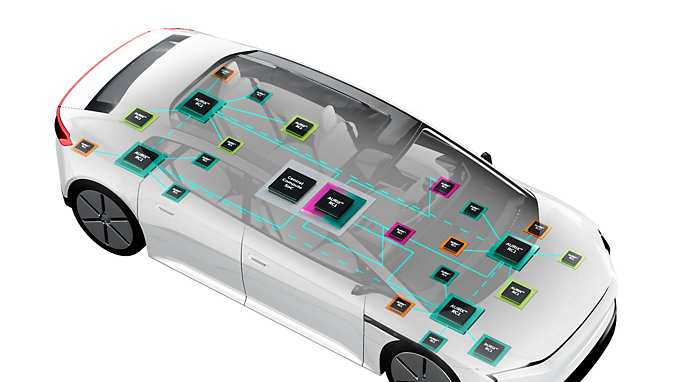
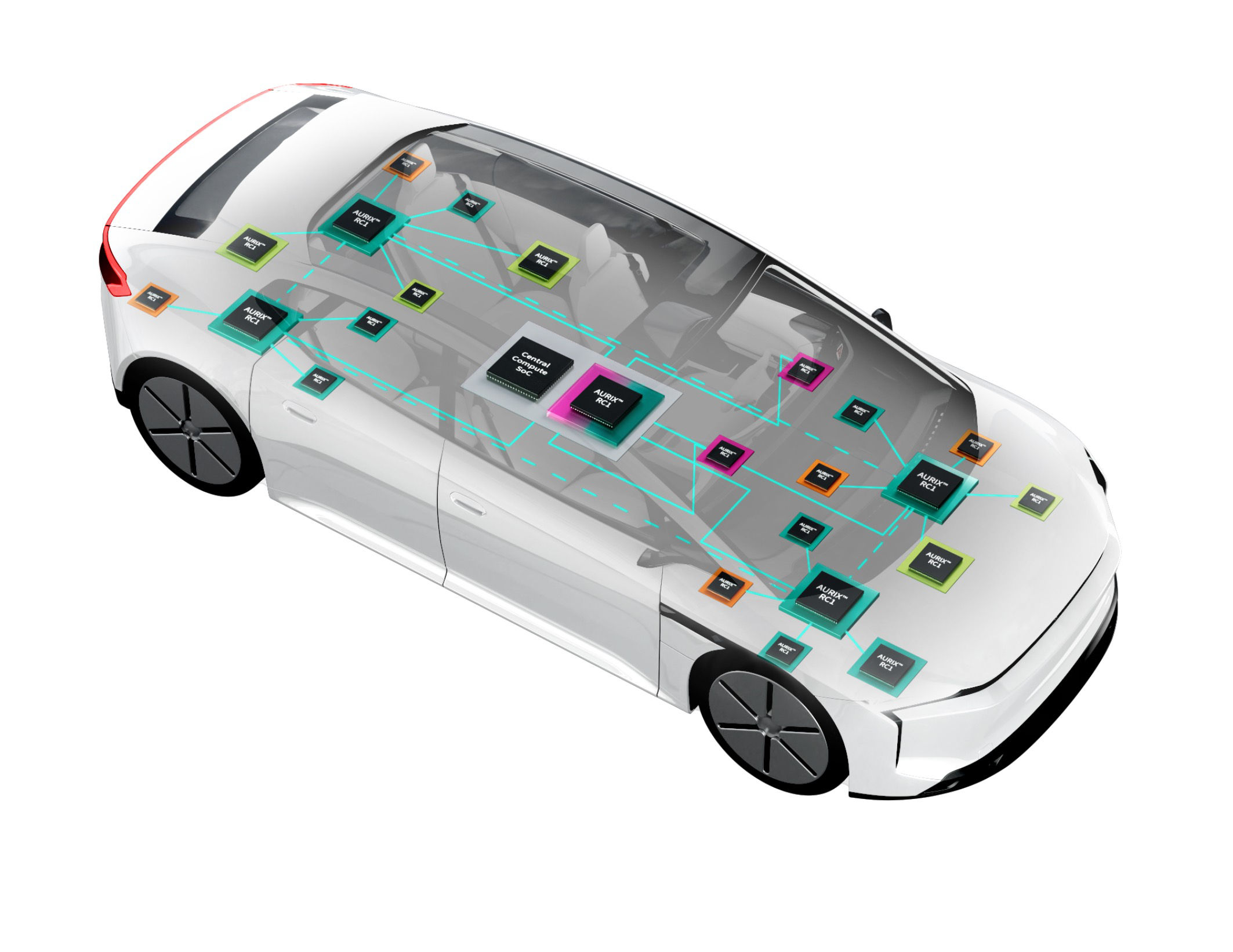
AURIX™ RC1 vereinfacht Entwicklung softwaredefinierter Fahrzeuge durch domänenübergreifende, skalierbare Mikrocontroller-Basis anstelle von Einzellösungen
JPEG
2126x1642 px
Share in WeChat
Scan the QR code with your WeChat App to share this page.
Information Number : infpr202611-026
