
- ASIC
- Battery management ICs
- Clocks and timing solutions
- ESD and surge protection devices
- Automotive Ethernet
- Evaluation Boards
- High reliability
- Isolation
- Memories
- Microcontroller
- Power
- RF
- Security and smart card solutions
- Sensor technology
- Small signal transistors and diodes
- Transceivers
- Universal Serial Bus (USB)
- Wireless connectivity
- Suchwerkzeuge
- Technologie
- Packages
- Produktinformationen
- Bezugsquellen
- Überblick
- Automotive Ethernet PHY for in-vehicle networking
- Automotive Ethernet Switches for in-vehicle networking
- Überblick
- Embedded flash IP solutions
- Flash+RAM MCP solutions
- F-RAM (Ferroelectric RAM)
- NOR flash
- nvSRAM (non-volatile SRAM)
- PSRAM – Pseudostatic RAM
- Radiation hardened and high-reliability memories
- SRAMs (Static Random Access Memory)
- Wafer and die memory solutions
- Überblick
- AURIX™ TriCore™ MCUs
- PSOC™ MCUs
- TRAVEO™ T2G MCUs
- XMC™ MCUs
- Legacy MCUs
- MOTIX™ motor control SoCs/SIPs
- Überblick
- AC-DC power conversion
- Automotive conventional powertrain ICs
- Class D audio amplifier ICs
- Contactless power and sensing ICs
- DC-DC converters
- Diodes and thyristors (Si/SiC)
- eFuses
- Gallium nitride (GaN)
- Gate Driver ICs
- IGBTs – Insulated gate bipolar transistors
- Intelligent power modules (IPM)
- JFETs
- LED driver ICs
- Motor drivers
- MOSFETs
- Power modules
- Power supply ICs
- Protection and monitoring ICs
- Silicon carbide (SiC)
- Smart power switches
- Solid state relays and isolators
- Wireless charging ICs
- Überblick
- Antenna cross switches
- Antenna tuners
- Bias and control
- Coupler
- Driver amplifiers
- Rad hard microwave and RF
- Low noise amplifiers (LNAs)
- RF diode
- RF switches
- RF transistors
- Wireless control receiver
- Überblick
- Calypso® products
- CIPURSE™ products
- Contactless memories
- OPTIGA™ embedded security solutions
- SECORA™ security solutions
- Security controllers
- Smart card modules
- Smart solutions for government ID
- Überblick
- ToF 3D image sensors
- Current sensors
- Gas sensors
- Inductive position sensors
- MEMS microphones
- Pressure sensors
- Radar sensors
- Magnetic position sensors
- Magnetic speed sensors
- Capacitive sensors
- Temperature sensors
- Battery sensors
- Digital X-ray
- Computed tomography
- Sensor interface ASICs
- Überblick
- Bipolar transistors
- Diodes
- Small signal/small power MOSFET
- Überblick
- Automotive transceivers
- Control communication
- Powerline communications
- Überblick
- USB 2.0 peripheral controllers
- USB 3.2 peripheral controllers
- USB hub controllers
- USB PD high-voltage microcontrollers
- USB-C AC-DC and DC-DC charging solutions
- USB-C charging port controllers
- USB-C Power Delivery controllers
- Überblick
- AIROC™ Automotive wireless
- AIROC™ Bluetooth® and multiprotocol
- AIROC™ connected MCU
- AIROC™ Wi-Fi + Bluetooth® combos
- AIROC™ Ultra-Wide Band Solutions
- Überblick
- Commercial off-the-shelf (COTs) memory portfolio
- Defense memory portfolio
- High-reliability power conversion and management
- Überblick
- NewSpace memory portfolio
- Radiation tolerant power
- Überblick
- Rad hard microwave and RF
- Radiation hardened power
- Space memory portfolio
- Überblick
- Parallel NOR flash
- SEMPER™ NOR flash family
- SEMPER™ X1 LPDDR flash
- Serial NOR flash
- Überblick
-
32-bit TriCore™ AURIX™ – TC2x
- Überblick
- AURIX™ family – TC21xL
- AURIX™ family – TC21xSC (wireless charging)
- AURIX™ family – TC22xL
- AURIX™ family – TC23xL
- AURIX™ family – TC23xLA (ADAS)
- AURIX™ family – TC23xLX
- AURIX™ family – TC264DA (ADAS)
- AURIX™ family – TC26xD
- AURIX™ family – TC27xT
- AURIX™ family – TC297TA (ADAS)
- AURIX™ family – TC29xT
- AURIX™ family – TC29xTT (ADAS)
- AURIX™ family – TC29xTX
- AURIX™ TC2x emulation devices
-
32-bit TriCore™ AURIX™ – TC3x
- Überblick
- AURIX™ family - TC32xLP
- AURIX™ family – TC33xDA
- AURIX™ family - TC33xLP
- AURIX™ family – TC35xTA (ADAS)
- AURIX™ family – TC36xDP
- AURIX™ family – TC37xTP
- AURIX™ family – TC37xTX
- AURIX™ family – TC38xQP
- AURIX™ family – TC39xXA (ADAS)
- AURIX™ family - TC39xXX/XP
- AURIX™ family – TC3Ex
- AURIX™ TC37xTE (emulation devices)
- AURIX™ TC39xXE (emulation devices)
- 32-bit TriCore™ AURIX™ – TC4x
- Überblick
- PSOC™ 4 HV Arm® Cortex®-M0+
- PSOC™ 5 LP Arm® Cortex®-M3
- PSOC™ 6 Arm® Cortex®-M4/M0+
- PSOC™ Multitouch Touchscreen Controller
- PSOC™ Control C3 Arm® Cortex®-M33
- PSOC™ Automotive 4: Arm® Cortex®-M0/M0+
- PSOC™ Edge Arm® Cortex® M55/M33
- PSOC™ Control C1 Arm® Cortex®-M0
- Überblick
- 32-bit TRAVEO™ T2G Arm® Cortex® for body
- 32-bit TRAVEO™ T2G Arm® Cortex® for cluster
- Überblick
- 32-bit XMC1000 industrial microcontroller Arm® Cortex®-M0
- 32-bit XMC4000 industrial microcontroller Arm® Cortex®-M4
- XMC5000 Industrial Microcontroller Arm® Cortex®-M4F
- 32-bit XMC7000 Industrial Microcontroller Arm® Cortex®-M7
- Überblick
- Legacy 32-bit MCU
- Legacy 8-bit/16-bit microcontroller
- Other legacy MCUs
- 32-bit FM Arm® Cortex® Microcontroller
- Sensing controllers
- Überblick
- AC-DC integrated power stage - CoolSET™
- AC-DC PWM and PFC controller
- Überblick
- Bridge rectifiers & AC switches
- CoolSiC™ Schottky diodes
- Diode bare dies
- Silicon diodes
- Thyristor / Diode Power Modules
- Thyristor soft starter modules
- Thyristor/diode discs
- Überblick
- GaN bidirectional switches
- GaN smart
- GaN transistors (GaN HEMTs)
- GaN with integrated driver
- GaN bare dies
- Überblick
- Automotive gate driver ICs
- Gate Driver ICs for GaN HEMTs
- Gate Driver ICs for SiC MOSFETs
- Half-Bridge Gate Driver ICs
- High-Side Gate Driver ICs
- Isolated Gate Driver ICs
- Level-Shift Gate Driver ICs
- Low-Side Gate Driver ICs
- Three-Phase Gate Driver ICs
- Transformer Driver ICs
- Überblick
- AC-DC LED driver ICs
- Ballast IC
- DC-DC LED driver IC
- LED dimming interface IC
- Linear LED driver IC
- LITIX™ - Automotive LED Driver IC
- NFC wireless configuration IC with PWM output
- VCSEL driver
- Überblick
- BLDC motor drivers
- BDC motor drivers
- Stepper & servo motor drivers
- Motor drivers with MCU
- Bridge drivers with MOSFETs
- Gate Driver ICs
- Überblick
- Automotive MOSFET: 30 V to 800 V
- Dual MOSFETs
- MOSFET (Si & SiC) Modules
- N-channel depletion mode MOSFET
- N-channel MOSFETs
- P-channel MOSFETs
-
Silicon carbide CoolSiC™ MOSFETs
- Überblick
- Silicon Carbide MOSFET modules
- Silicon carbide MOSFET discretes
- Silicon carbide MOSFETs bare dies
- 400 V / 440 V Silicon Carbide MOSFETs
- 650 V Silicon Carbide MOSFETs
- 750 V Silicon Carbide MOSFETs
- 1200 V Silicon Carbide MOSFETs
- 2000 V Silicon Carbide MOSFETs
- 2300 V Silicon Carbide MOSFETs
- 3300 V Silicon Carbide MOSFETs
- 1700 V Silicon Carbide MOSFETs
- Silicon Carbide Bidirectional Switches
- Small signal/small power MOSFET
- Überblick
- IGBT modules
- MOSFET (Si & SiC) Modules
- Intelligent power modules (IPM)
- Diodes and thyristors (Si/SiC)
- Automotive IGBT and CoolSiC™ MOSFET modules
- High density power modules
- Überblick
- Automotive transceivers
- Linear voltage regulators
- Power management ICs (PMIC)
- Automotive switching regulators
- System Basis Chips (SBC)
- Überblick
- High-side switches
- Low-side switches
- Multichannel SPI Switches & Controller
- Automotive eFuses
- Überblick
- Radar sensors for automotive
- Radar sensors for IoT
- Überblick
- EZ-USB™ CX3 MIPI CSI2 to USB 3.0 camera controller
- EZ-USB™ FX10 & FX5N USB 10Gbps peripheral controller
- EZ-USB™ FX20 USB 20 Gbps peripheral controller
- EZ-USB™ FX3 USB 5 Gbps peripheral controller
- EZ-USB™ FX3S USB 5 Gbps peripheral controller with storage interface
- EZ-USB™ FX5 USB 5 Gbps peripheral controller
- EZ-USB™ SD3 USB 5 Gbps storage controller
- EZ-USB™ SX3 FIFO to USB 5 Gbps peripheral controller
- Überblick
- EZ-PD™ PMG1-B1 Battery Charge Controller with USB-C PD MCU
- EZ-PD™ PMG1-S0 high-voltage MCU with USB-C and PD
- EZ-PD™ PMG1-S1 high-voltage MCU with USB-C and PD
- EZ-PD™ PMG1-S2 high-voltage MCU with USB PD
- EZ-PD™ PMG1-S3 high-voltage MCU with USB-C & PD
- EZ-PD™ PMG1-B2 Battery Charge Controller with USB-C PD MCU
- Überblick
- EZ-PD™ CCG3 USB type-C port controller PD
- EZ-PD™ CCG3PA USB-C and PD
- EZ-PD™ CCG3PA-NFET USB-C PD controller
- EZ-PD™ CCG7x consumer USB-C Power Delivery & DC-DC controller
- EZ-PD™ PAG1: power adapter generation 1
- EZ-PD™ PAG2: Power Adapter Generation 2
- EZ-PD™ PAG2-PD USB-C PD Controller
- Überblick
- EZ-PD™ ACG1F one-port USB-C controller
- EZ-PD™ CCG2 USB Type-C port controller
- EZ-PD™ CCG3PA Automotive USB-C and Power Delivery controller
- EZ-PD™ CCG4 two-port USB-C and PD
- EZ-PD™ CCG5 dual-port and CCG5C single-port USB-C PD controllers
- EZ-PD™ CCG6 one-port USB-C & PD controller
- EZ-PD™ CCG6_CFP and EZ-PD™ CCG8_CFP Dual-Single-Port USB-C PD
- EZ-PD™ CCG6DF dual-port and CCG6SF single-port USB-C PD controllers
- EZ-PD™ CCG7D Automotive dual-port USB-C PD + DC-DC controller
- EZ-PD™ CCG7S Automotive single-port USB-C PD solution with a DC-DC controller + FETs
- EZ-PD™ CCG8 dual-single-port USB-C PD
- EZ-PD™ CMG1 USB-C EMCA controller
- EZ-PD™ CMG2 USB-C EMCA controller with EPR
Nach Architektur durchsuchen
Nach Technologien durchsuchen
- AKTUELLES IN
- Aerospace and defense
- AI and data center
- Automotive
- Communications
- Consumer electronics
- Industrial
- Security solutions
- Smart home and building
- Solutions
- Überblick
- Defense applications
- Space applications
- Überblick
- Data center power solutions
- Edge computing
- Machine Learning Edge AI
- Überblick
- ADAS & autonomous driving
- Automotive body electronics
- Automotive LED lighting systems
- Automotive zonal architecture
- Chassis control & safety
- Electric vehicle drivetrain system
- EV thermal management system
- In-vehicle infotainment & HMI
- Light electric vehicle solutions
- Überblick
- Satellite communications
- Telecommunications infrastructure
- Überblick
- AR and smart glasses
- Complete system solutions for smart TVs
- Consumer Wearables
- Drones
- Home appliances
- Mobile device and smartphone solutions
- Photovoltaic
- Power adapters and chargers
- Semiconductor solutions for home entertainment applications
- Smart conference systems
- Überblick
- Asset Tracking
- Battery energy storage (BESS)
- Battery formation and testing
- Digital health
- Electric forklifts
- EV charging
- High voltage solid-state power distribution
- Hydrogen electrolysis
- Industrial & Medical SMPS
- Industrial automation
- Industrial motor drives and controls
- Industrial robots
- LED lighting system design
- Light electric vehicle solutions
- Photovoltaic
- Power adapters and chargers
- Power tools
- Power transmission and distribution
- Robotics
- Traction
- Uninterruptible power supplies (UPS)
- Wind power
- Überblick
- Access control and ticketing
- Device authentication and brand protection
- Embedded security for the Internet of Things (IoT)
- eSIM applications
- Government identification
- Mobile security
- Payment solutions
- Überblick
- Domestic robots
- Heating ventilation and air conditioning (HVAC)
- Home and building automation
- PC accessories
- Semiconductor solutions for home entertainment applications
- Überblick
- Battery management systems (BMS)
- Connectivity
- Human Machine Interface
- Machine Learning Edge AI
- Motor control
- Power conversion
- Security
- Sensor solutions
- System diagnostics and analytics
- Überblick
- Data center power distribution
- FPGAs in datacenter applications
- Power system reliability modeling
-
Server rack power management
- Überblick
- AI accelerator cards
- AMD CPU voltage regulator Ics
- Ampere CPU voltage regulator Ics
- Intel CPU voltage regulator Ics
- Intermediate Bus Converter (IBC)
- Network switches for AI data centers and server racks
- Server battery backup units (BBU)
- Server power path protection
- Server power supply units (PSU)
- SmartNIC cards
- Überblick
- Automotive animated LED lighting system
- Automotive LED front single light functions
- Automotive LED rear single light functions
- Full LED headlight system - multi-channel LED driver
- LED driver solutions for electric two- and three-wheelers
- LED pixel light controller - supply & communication
- Static interior ambient LED light
- Überblick
- Active suspension control
- Automotive braking solutions
- Automotive steering solutions
- Chassis domain control
- Überblick
-
Automotive battery management system
- Überblick
- Automotive battery cell monitoring & balancing
- Automotive battery control unit (BCU)
- Automotive battery isolated communication
- Automotive battery management system (BMS) - 12 V to 24 V
- Automotive battery management system (BMS) - 48 V
- Automotive battery management system (BMS) - high-voltage
- Automotive battery pack monitoring
- Automotive battery passport & event logging
- Automotive battery protection & disconnection
- Automotive current sensing & coulomb counting
- BMS (electric two- & three-wheelers)
- Auxiliary inverter
- Auxiliary inverter - high-voltage (commercial vehicles)
- DC-DC converter high-voltage
- DC-DC converter high-voltage (commercial vehicles)
- EV charging
- EV traction inverter
- FCEV powertrain solutions
- On-board charging (electric commercial vehicles)
- On-board charging (OBC)
- On-board charging (OBC) solutions for electric two- and three-wheelers
- Traction inverter (electric commercial vehicles)
- Traction inverter (electric two- & three-wheelers)
- Überblick
- Audio amplifier solutions
- Complete system solutions for smart TVs
- Distribution audio amplifier unit solutions
- Home theater installation speaker system solutions
- Party speaker solutions
- PoE audio amplifier unit solutions
- Portable speaker solutions
- Powered active speaker systems
- Remote control
- Smart speaker designs
- Soundbar solutions
- Überblick
- Disposable healthcare equipment
- Durable healthcare equipment
- Healthcare wearables
- Überblick
- Data center power solutions
- Digital input/output (I/O) modules
- DIN rail power supply solutions
- Home and building automation
- Industrial HMI Monitors and Panels
- Industrial motor drives and controls
- Industrial PC
- Industrial robots
- Machine vision
- Mobile robots (AGV, AMR)
- Programmable logic controller (PLC)
- Solid-state circuit breaker (SSCB)
- Uninterruptible power supplies (UPS)
- Überblick
- AC-DC power conversion
- DC-DC power conversion
- Überblick
- Power supply health monitoring
- AKTUELLES IN
- Digital documentation
- Boards & Kits
- Finder & selection tools
- Platforms
- Services
- Simulation & Modeling
- Software
- Tools
- Partners
- Maker
- University Alliance Program
- Überblick
- Bipolar Discs Finder
- Bipolar Module Finder
- Connected Secure Systems Finder
- Diode Rectifier Finder
- ESD Protection Finder
- Evaluation Board Finder
- Gate Driver Finder
- IGBT Discrete Finder
- IGBT Module Finder
- IPM Finder
- Microcontroller Finder
- MOSFET Finder
- PMIC Finder
- PSOC™ and FMx MCU Board & Kit Finder
- Radar Finder
- Reference Design Finder
- Simulation Model Finder
- Smart Power Switch Finder
- Transceiver Finder
- Voltage Regulator Finder
- Wireless Connectivity Board & Kit Finder
- Infineon Gate Driver Recommendation Tool
- Überblick
- AIROC™ software & tools
- AURIX™ software & tools
- DRIVECORE™ for automotive software development
- iMOTION™ software & tools
- Infineon Smart Power Switches & Gate Driver Tool Suite
- MOTIX™ software & tools
- OPTIGA™ software & tools
- PSOC™ software & tools
- TRAVEO™ software & tools
- XENSIV™ software & tools
- XMC™ software & tools
- Überblick
- HiRel Fit Rate Tool
- Infineon Designer
- Interactive product sheet
- IPOSIM Online Power Simulation Platform
- InfineonSpice Offline Simulation Tool
- OPTIREG™ automotive power supply ICs Simulation Tool (PLECS)
- Power MOSFET Simulation Models
- PowerEsim Switch Mode Power Supply Design Tool
- Solution Finder
- XENSIV™ Magnetic Sensor Simulation Tool
- Überblick
- Configuration
- Hardware Development
- Programming & Testing
- SDK
- Tools Archive
- Utilities
- Überblick
- AURIX™ certifications
- AURIX™ development tools
-
AURIX™ Embedded Software
- Überblick
- AURIX™ Applications software
- AURIX™ Artificial Intelligence
- AURIX™ Gateway
- AURIX™ iLLD Drivers
- Infineon safety
- AURIX™ Security
- AURIX™ TC3xx Motor Control Application Kit
- AURIX™ TC4x SW application architecture
- Infineon AUTOSAR
- Communication and Connectivity
- Middleware
- Non AUTOSAR OS/RTOS
- OTA
- AURIX™ Microcontroller Kits
- Überblick
- TRAVEO™ Development Tools
- TRAVEO™ Embedded Software
- Überblick
- XENSIV™ Development Tools
- XENSIV™ Embedded Software
- XENSIV™ evaluation boards
- Überblick
- CAPSENSE™ Controllers Code Examples
- Memories for Embedded Systems Code Examples
- PSOC™ 1 Code Examples for PSOC™ Designer
- PSOC™ 3 Code Examples for PSOC™ Creator
- PSOC™ 3/4/5 Code Examples
- PSOC™ 4 Code Examples for PSOC™ Creator
- PSOC™ 6 Code Examples for PSOC™ Creator
- PSOC™ 63 Code Examples
- USB Controllers Code Examples
- Überblick
- AIROC™ Wi-Fi & Bluetooth EZ-Serial Module Firmware Platform
- AIROC™ Wi-Fi & Bluetooth Linux and Android Drivers
- emWin Graphics Library and GUI for PSOC™
- Infineon Complex Device Driver for Battery Management Systems
- Memory Solutions Hub
- PSOC™ 6 Peripheral Driver Library (PDL) for PSOC™ Creator
- USB Controllers EZ-USB™ GX3 Software and Drivers
- Überblick
- CAPSENSE™ Controllers Configuration Tools EZ-Click
- DC-DC Integrated POL Voltage Regulators Configuration Tool – PowIRCenter
- EZ-USB™ SX3 Configuration Utility
- FM+ Configuration Tools
- FMx Configuration Tools
- Tranceiver IC Configuration Tool
- USB EZ-PD™ Configuration Utility
- USB EZ-PD™ Dock Configuration Utility
- USB EZ-USB™ HX3C Blaster Plus Configuration Utility
- USB UART Config Utility
- XENSIV™ Tire Pressure Sensor Programming
- Überblick
- EZ-PD™ CCGx Dock Software Development Kit
-
FMx Softune IDE
- Überblick
- RealOS™ Real-Time Operating System
- Softune IDE Language tools
- Softune Workbench
- Tool Lineup for F2MC-16 Family SOFTUNE V3
- Tool Lineup for F2MC-8FX Family SOFTUNE V3
- Tool Lineup for FR Family SOFTUNE V6
- Virtual Starter Kit
- Windows 10 operation of released SOFTUNE product
- Windows 7 operation of released SOFTUNE product
- Windows 8 operation of released SOFTUNE product
- Infineon GUI Designer
- ModusToolbox™ Software
- PSOC™ Creator Software
- Radar Development Kit
- RUST
- USB Controllers SDK
- Wireless Connectivity Bluetooth Mesh Helper Applications
- XMC™ DAVE™ Software
- Überblick
- AIROC™ Bluetooth® Connect App Archive
- Cypress™ Programmer Archive
- EZ-PD™ CCGx Power Software Development Kit Archive
- ModusToolbox™ Software Archive
- PSOC™ Creator Archive
- PSOC™ Designer Archive
- PSOC™ Programmer Archive
- USB EZ-PD™ Configuration Utility Archives
- USB EZ-PD™ Host SDK Archives
- USB EZ-USB™ FX3 Archive
- USB EZ-USB™ HX3PD Configuration Utility Archive
- WICED™ Smart SDK Archive
- WICED™ Studio Archive
- Überblick
- Infineon Developer Center Launcher
- Infineon Register Viewer
- Pin and Code Wizard
- Timing Solutions
- Wireless Connectivity
- AKTUELLES IN
- Support
- Training
- Infineon Developer Community
- Neueste Nachrichten
Wirtschaftspresse
Okt. 01, 2026
Wirtschaftspresse
Sept. 29, 2026
Wirtschaftspresse
Sept. 23, 2026
Wirtschaftspresse
Sept. 16, 2026
- Unternehmen
- Unsere Geschichten
- Events
- Presse
- Investor
- Karriere
- Qualität
- Neueste Nachrichten
Wirtschaftspresse
Okt. 01, 2026
Wirtschaftspresse
Sept. 29, 2026
Wirtschaftspresse
Sept. 23, 2026
Wirtschaftspresse
Sept. 16, 2026
Share in WeChat
Scan the QR code with your WeChat App to share this page.

Wie Halbeiter die Dekarbonisierung voranbringen
Der steigende Energiebedarf, die Verknappung natürlicher Ressourcen und der Klimawandel erfordern einen verantwortungsvollen Umgang mit Energie. Das heißt auch, dass Erzeugung, Übertragung, Speicherung und Verbrauch maximal effizient werden. Halbleiterlösungen sind dabei unerlässlich. Sie seigern die Effizienz entlang der gesamten Energiekette.
Juli 11, 2025
Im Jahr 2024 wurden weltweit noch nie dagewesene Temperaturen gemessen. Es wird das erste Jahr sein, in dem die Durchschnittstemperatur deutlich mehr als 1,5 °C über dem vorindustriellen Niveau liegt. Die Ergebnisse des aktuellen jährlichen Copernicus-Berichts1 sind alarmierend. Im Jahr 2024 wurden mehrere globale Rekorde gebrochen, sowohl für die Treibhausgaskonzentration als auch für die Luft- und Meeresoberflächentemperatur. Diese Entwicklungen trugen zu Extrem-Ereignissen wie Überschwemmungen, Hitzewellen und Waldbränden bei. Der Bericht unterstreicht die dringende Notwendigkeit, so schnell wie möglich Netto-Null-Emissionen zu erreichen. Die Welt ist jedoch immer noch stark von fossilen Brennstoffen abhängig, die den Klimawandel befeuern.

Während die Bevölkerung und die Industrie in einem noch nie dagewesenen Tempo wachsen, steigt der Energiebedarf kontinuierlich an. Daher werden die energiebedingten Kohlendioxidemissionen aus der Verbrennung und aus industriellen Prozessen nach Angaben der Internationalen Energieagentur (IEA) bis zum Jahr 2024 auf ein Rekordhoch von 37,8 Milliarden Tonnen ansteigen - trotz weltweiter Bemühungen um CO2-Reduktion. Der steigende Energieverbrauch auf der einen und der Klimawandel auf der anderen Seite stellen die Gesellschaften weltweit vor ein Dilemma.
Um diese Probleme zu lösen, müssen wir Energie klüger nutzen.
Wir befinden uns noch in der Anfangsphase der grünen Energiewende. Zwar haben sich Industrien wie Solar-, Wind- und Wasserkraft heute zu riesigen Produktionsbetrieben entwickelt, doch tragen sie laut IEA World Energy Outlook 2024 nur zu etwa 12 Prozent der weltweiten Energieversorgung bei. Dieser Anteil dürfte jedoch um bis zu 70 Prozent steigen, wenn wir das IEA-Szenario „Net Zero Emissions by 2050“ erreichen.
Die Bekämpfung des Klimawandels und die Verringerung der Kohlenstoffemissionen erfordern einen proaktiven und nicht einen reaktiven Ansatz. Hier kann die Technologie eine entscheidende Rolle spielen, indem sie dazu beiträgt, alle Stufen der Energieumwandlungskette zu optimieren: Erzeugung, Speicherung, Übertragung und Verbrauch. Vor allem die Mikroelektronik kann dafür sorgen, dass wir das Beste aus den erneuerbaren Energien herausholen, dass Energie mit einem Minimum an Verlusten gespeichert und übertragen wird und dass wir unseren Energieverbrauch mit effizienten Geräten und Maschinen senken können. Das Potenzial ist riesig!
Die Halbleitertechnologie hat sich als Schlüsseltechnologie erwiesen, um die Herausforderungen des Klimawandels und der Ressourcenknappheit zu meistern. Halbleiterlösungen fördern den Durchbruch der grünen Energie und die Elektrifizierung verschiedener Branchen, darunter Industrie, Verkehr und Gebäude. Erneuerbare Energieanlagen sind auf Halbleiter angewiesen, um effizient zu arbeiten.
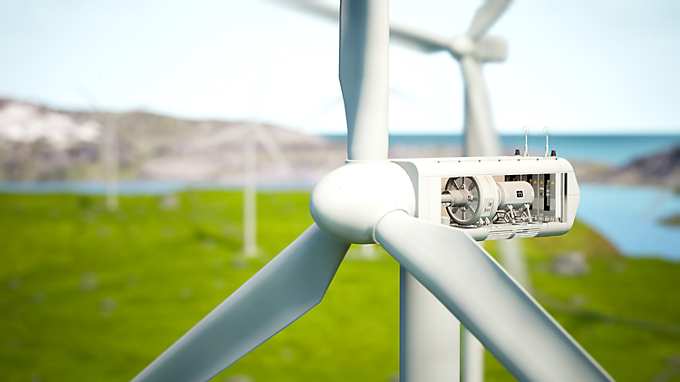
Halbleiter optimieren die elektrische Leistungsumwandlung und können so die Energieeffizienz maximieren. Dies führt zu einer Reduzierung von Abwärme und Kühlbedarf, was entsprechend auch die CO2-Emissionen senkt.
Wo können Halbleiter dazu beitragen, CO2-Emissionen zu reduzieren und die Dekarbonisierung zu fördern? Da wären zunächst einmal die Bereiche Wind und Solar. Jeder Schritt der Energieumwandlung, z. B. die Umwandlung von Wind- oder Sonnenenergie in Wechselstrom für das Netz, führt zu einem gewissen Energieverlust, der als Wärme abgeführt wird. Moderne Halbleiter helfen, diese Umwandlungsverluste zu minimieren und die Energiemenge zu erhöhen, die aus diesen natürlichen Ressourcen gewonnen werden kann.

Im Jahr 2023 wurden Infineon-Produkte in 2,9 Millionen neue Solar- und 18.600 Windkraftanlagen eingebaut, die eine Gesamtleistung von 210 GW an sauberer Energie ermöglichen. Dies entspricht einer Vermeidung von 225 Millionen Tonnen CO2-Emissionen pro Jahr.
Das weltweite Datenvolumen wächst exponentiell, angetrieben durch rasante Fortschritte bei KI-Anwendungen. Das weltweite Datenvolumen wird bis 2027 schätzungsweise 291 Zettabytes erreichen wird (IDC Data Age Report 2025). Das Rückgrat dieser Entwicklung und unserer digitalen Gesellschaft sind Rechenzentren – von Unternehmensservern bis hin zu „KI-Fabriken“. Rechenzentren speichern, vernetzen und verarbeiten riesige Datenmengen. Gleichzeitig steigt ihr Energiebedarf rapide an. Laut IEA verbrauchen Rechenzentren rund 2 Prozent des weltweiten Gesamtstroms, das sind 460 TWh, was dem Energieverbrauch von rund 153 Millionen Haushalten entspricht. Bis zu 40 Prozent der Energie wird in der Regel allein für die Kühlung verbraucht. Darüber hinaus gehen in einem durchschnittlichen Rechenzentrum etwa 17 Prozent der Energie bei verschiedenen Energieumwandlungsschritten verloren.
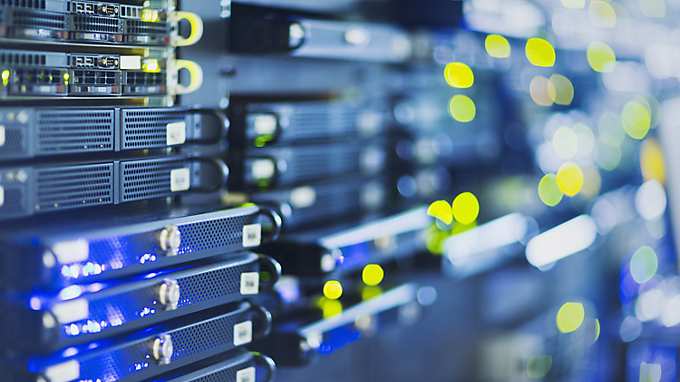
Es besteht ein großer Bedarf an innovativen Energielösungen, die die Abwärme reduzieren und den Kühlungsbedarf minimieren. Hier kommen Leistungshalbleiter ins Spiel, insbesondere die neuesten Technologien wie Siliziumkarbid (SiC) und Galliumnitrid (GaN).
Diese Komponenten erhöhen die Energieeffizienz erheblich und optimieren jeden Schritt der Energieumwandlung – vom Stromnetz bis zu den Prozessoren. Dieser Ansatz trägt dazu bei, dass Betriebskosten gesenkt und gleichzeitig nachhaltiger gewirtschaftet wird. Durch die Verringerung des Kühlbedarfs können Betreiber Wasserressourcen schonen und die CO2-Emissionen erheblich reduzieren.
Durch die Kombination modernster Halbleiter von Infineon können Rechenzentren ihren Stromverbrauch drastisch senken:
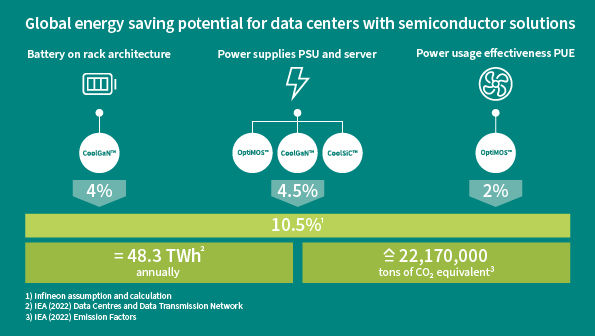
Es wird erwartet, dass die Anzahl der Smart Homes in diesem Jahr weltweit 500 Millionen erreichen wird. Das bringt zwar mehr Komfort, aber auch einen höheren Energieverbrauch mit sich. Um den Herausforderungen des Klimawandels zu begegnen, ist es von entscheidender Bedeutung, den Gesamtenergieverbrauch zu senken. Insbesondere durch intelligente Funktionalitäten. In Verbindung mit KI spielen hier Sensoren eine wichtige Rolle: Sie ermöglichen es vernetzten Geräten, ihre Umgebung zu verstehen und entsprechend zu reagieren – ein Konzept, das als „kontextbezogenes Bewusstsein“ bekannt ist.


Radarsensoren erkennen Anwesenheit, Position und Bewegung von Objekten. Dieses Prinzip macht sich der Samsung Frame TV zunutze. Der innovative Fernseher mit aufwändigen Bildschirmschoner besitzt einen eingebauten Radarsensor von Infineon. Dieser kann Personen im Raum erkennen, und schaltet den Kunstmodus ab, sobald niemand mehr in der Nähe ist. Das spart OLED-Lebensdauer und Energie. In ähnlicher Weise funktioniert dieses Prinzip der Bewegungs- oder Anwesenheitserkennung auch bei Beleuchtungssystemen, Thermostaten, Klimaanlagen oder Sicherheitskameras. Wenn wir davon ausgehen, dass es weltweit 500 Millionen intelligente Haushalte mit fünf intelligenten Geräten gibt und jedes Gerät im Durchschnitt 100 Wh pro Tag einspart, könnten wir den Energieverbrauch um jährlich 90 TWh reduzieren.

Ein weiteres Beispiel ist ein intelligentes Lüftungssystem mit einem Umweltsensor von Infineon, der die CO2-Konzentration anhand der Anzahl der Personen im Raum misst. Dementsprechend sorgt das Lüftungsgerät für eine Frischluftzufuhr, die genau auf den Bedarf abgestimmt ist. Eine solche Installation kann bis zu 54 Prozent Energie sparen, wie die Fachzeitschrift „Energy and Buildings“ (2020) beschreibt. Durch die Integration dieser Sensoren können Smart Homes den Energieverbrauch optimieren, die CO2-Emissionen reduzieren und die Nutzererfahrung sowie den Komfort erhöhen.
Diese vielversprechenden Anwendungsfälle zeigen, wie Technologie grüne, effektive und intelligente Lösungen bietet. Die Mikroelektronik kann eine wichtige Rolle dabei spielen, unsere Klimaziele zu erreichen und den Weg in eine nachhaltige Zukunft zu ebnen.
Quellen:
[1] Copernicus (Januar 2025): Global Climate Highlights 2024